Herocrats Spotlight: Rachael Button Expands the Definition of a Library

Photo credit: Nick Chill, Decorah Public Library

Rachael Button is a Children’s and Young Adult Librarian at Decorah Public Library in Northeastern Iowa, who spoke with us about her experience as a librarian during COVID-19 lockdowns, and the constantly expanding definition of a library. 

What is your role at the library? 

“I'm the children's and young adult librarian at Decorah Public Library. I handle collection development, programming, and space management for ages 0 through 18. This work is suited to my interests because I get to work with young people at a range of ages and stages. I really like watching the way that kids come into their own, whether they're babies that are learning how to use the stairs, or high schoolers who are asking me for a book that reflects their identity. I feel really honored to be a witness to that, and to accompany them through those experiences.”

Your position has looked really different in the last two years, how have you had to be courageous in the face of a pandemic? 

“I think something that takes courage in this job is that it's a lot of responsibility to be entrusted with the programs and the collections for an entire community’s youth. In March 2020, it was not easy or intuitive for me to jump into the new, digital programming world that was asked of me as our community shut down; I'm an educator, and I'm not necessarily an entertainer. I work for a well resourced library, but during those first shutdown weeks, I was on an old iPod, in my house doing story times and editing on an app I downloaded on our spotty-at-best rural WiFi. It was important that families and children continued to see familiar faces during that first lockdown.  It was a quick and necessary pivot.

 As the library opened up our spaces gradually, we've done a lot of outdoor programming, and tried to support people at whatever comfort level they're at. We are offering in-person programs inside, in-person programs outside, and things that people can do at home. All three have proven to be really popular, and it's been this constant pivot and response as we try to meet people where they're at, and support them.

Something that we have seen is that the things that you do to accommodate people's safety during COVID can also accommodate a myriad of other things that make our work more inclusive. For example: if you’re a person who works a job where you can't take your child to story time at 10:00 AM on a Monday, you can still get a take-home craft bundle. We try to be really seasonal and age diverse in the programs and activities that we put out. I also have some teenagers and seniors who sign up to do our crafts, and I love that! There is an element of being able to do a project at your own pace and in your own space that is valuable beyond the COVID safety concerns that a lot of folks may still need.”

How has your work helped support and build a more just and equitable community? 

Rachael and a student on a biking field trip. Photo credit: Nick Chill, Decorah Public Library

“The further in my career that I have gotten, the more I've realized that access is a huge priority to me. The library offers kids the ability to come in and get books, programming, materials, and community engagement, all for free. We have a maker space, and kids can come in and use the materials that we've curated. Access to materials is really important to me, and giving kids access to their community is important too. 

We run a biking field trip and a winter field trip program with local partners (Winneshiek County Conservation and Upper Explorerland Safe Routes to School), and that's been an exciting collaboration for me to reexamine what it means to be a library and a public space. My definition of my work goes beyond just literacy. I think that books are an invaluable tool for kids that grants them the ability to see both the world reflected to them, and themselves reflected, in a book. But I also believe in creating free opportunities for kids to connect with public land, and public spaces, that go beyond the walls of the library or the pages of a book. 

I’m grateful for the imaginative programming that we've had to do the last couple years because it has expanded the definition of what library programs can look like. I think it also shows that when you put funds to a public place where it can serve a lot of people, it has the ability to make a huge impact. I feel really grateful to get to be a part of that process.” 

Outside of pandemic times, have there been any persistent challenges to your work? If so, how have you handled them? 

“What can be challenging is that the political environment feels really heavy and we are all just hoping that our world doesn’t implode.  One of the things that has taken courage is to trust in my library, to trust in my community, to trust in the choices we've made in terms of building a collection and programs as we continue to center the community in the work.  Reading the news can be overwhelming--but in the midst of a lot of uncertainty our local community has been supportive of the library and I believe the work makes a difference.

I think in my particular role, working with children and families, it is my responsibility to develop programming and a collection that reflects the diversity of my community and to stay really positive and to uplift the good things that are happening. While that work is highly important, it can also be very challenging and it often requires constant refocusing. I don't think it's much different than going into the classroom as a teacher and trying to center yourself to be that person who can be responsive to your students. The people that I work with are not my students, but I think being a person who's centered and ready to respond and bring my full energy to the work is really important. That can be a challenge, but I think it's also something that calls us up, right?”

Photo of people painting

Rachael painting with students at a library program. Photo credit: Nick Chill, Decorah Public Library

Follow Herocrats on LinkedIn to stay updated on new spotlights

Herocrats LinkedIn

Herocrat Spotlight: Kimberly Strong Leads with Experience and Empathy

Kimberly Strong is a Constituent Services Coordinator for the Office of Mayor Tim Kelly with the City of Chattanooga, Tennessee. Kimberly shared with us what she’s learned in her various roles, including how to deliver unwelcome news and build relationships in the process. 

What have you done so far at  the City of Chattanooga? 

“I've been with the city of Chattanooga for 29 years. Within that time, I managed the recycling program and I served as the Public Information Specialist for the Water Quality Program. In that role I educated our citizens about the importance of water quality safety, water quality management, and how to reduce our water contaminants. I created a training program to retain staff, because we found that those in professional engineering positions would come to our department and work, but quickly move to private industry. I recently accepted a position with Mayor Tim Kelly as a Constituent Services Coordinator. 

Throughout my entire career with the city I have been involved in customer service and engaging with the public. I am so very humbled to have the position I'm in now, because I deal with the public on a wider scale. I take care of all of the concerns and issues that the mayor and city council receive.” 

What does it mean for you to be connected to that community that you serve?

“For me, the importance of being connected is having the trust of the community. If I'm having a town hall or a neighborhood association meeting, people have trust in knowing that whatever I'm talking about is the truth. It's not fluff, it’s not a stump speech, It's the truth. That trust comes over time. When you have ‘feel good’ neighborhood meetings or town hall meetings, when you have the positive things that you are presenting, people adapt to it and take ownership of it, and follow what you say. Then, when you go back and you have to have those hard conversations that the community won’t like, and you know they won’t like, they still trust you because they've seen how you operate, and how you talk to them and how you value their input.” 

What’s an example of this?

“A few years ago, we implemented a water quality fee; the community at large hated it. I would say we probably had 85% resistance. It took about a year to go out and educate people about why we had this fee, and what benefit it was to them. Again, when we had those difficult conversations, where the community was not initially on board, you still could tell them what benefit it is to them, and show them some results of what their dollars are going towards, and that built trust.” 

Kimberly stands with American Public Works Association Mascot PAWS at an APWA Conference.

Is there a particular project that has required you to be courageous? 

“The water quality program’s fee implementation process has been the most stressful project for me. We had resistance, not only from the community, but from some city officials that didn't approve of the program fee’s structure.  That program is  federally mandated by the Environmental Protection Agency, so there was no way of getting around it, and the City had received a very stiff fine for noncompliance from the Environmental Protection Agency.  The water quality program fee wasn't going away, but it took several months for the community as well as our council members to get on board with the fee. There was a continual educational component. That experience has been a time when I have had to be the most courageous in my work.”

What did it take for you to be courageous in this example?

“You have to make sure you don't waver in your message, and that that message stays the same for everyone. I had to train some of our staff on how to communicate these changes to all of our diverse communities in the city, and that alone was a process. Some people will say, ‘that's not courageous’, but yes it is, because we had people put their hands up and leave, or transfer departments because they just didn't want to be a part of the negative press that we had to deal with. And I was able to persevere through that.” 

How do you stay positive in the work?

“This work brings me joy, and I have been able to witness behavior change since the start of my career with the City of Chattanooga in 1993.

For example, in our citywide recycling program; the program was brand new to the city, and no one wanted to separate their trash, and pull out the paper, plastic or the glass. The opportunity to educate them, and see that program go from maybe 20% participation to over 90% participation during my time with the program was inspiring to me. Being able to take something from scratch, and educate people on why this program is important and see the changes happen keeps me engaged in the work. The same is true for the water quality program. It convinced the people not to contaminate the water supply and clog their drain with contaminants so that we can continue to use our waterways for recreational purposes.” 

Kimberly Strong presents during the Southeast Stormwater Association Annual Conference.

How do you balance outcomes that might be difficult for the community and still maintain some joy or passion for the work that you do? 

“In handling situations where I have to have tough conversations with people, I try to make sure I have all the facts. A big misunderstanding that happens often is that community members will call the City to get something repaired on their property, not knowing that the City cannot do work on private property. In these hard conversations, I try to start with the why- once I know that, I see if there's any room of opportunity where the City can do something to help them. I try to give them all the facts, and maintain a connection with them. Once we’ve had this tough conversation, I try to point them to available resources of people that can assist them with those financial burdens, so that they know that even though we can’t help them, there are possible resources that can. 

I had a gentleman, a senior citizen in the community, that needed a new roof, and he just couldn't afford to have it repaired. In Chattanooga, we have a couple of organizations that help senior citizens do home repair work, and they were able to assist him. So although he was mad that the City couldn’t help him, as a senior citizen with veteran status, we were still able to give him useful community resources. After that, I try to follow up a couple of weeks later to check in, ‘Did you get your roof taken care of?’ And then the next time they might have another issue, they’ll either try to handle it themselves, or, if they do call me,  I have established that trust with them that I will do my very best to accommodate their request. Hopefully I can be a catalyst to foster that change of some of our citizens' negative point of view of city government. 

In those instances when this occurs - I feel we are doing a good job.”


Herocrats Spotlight: Renee Tyler Infuses Inclusion into Community Service

Renee Tyler is currently the Director of Community Services for the City of Eau Claire, WI, and this spring she will be transitioning to a position as the Director of Administration for the City of Fulton, MO. We spoke with Renee about  her career in public service, and the importance of inclusivity at every level of decision making in government. 

How did you end up working in government?

“Prior to my work in government, I worked in the finance sector in New York City. For years I wanted to help people and see a result. The thing about the private sector often is that you don't see the impact of what you're doing. 

My undergraduate degree is in social welfare, and I have never officially used it, but I use it everyday in community services. My beginning in public service was influenced by living and working in the New York City metro area; seeing how one neighborhood can be beautiful, and not even two blocks down and a block over, and it's not beautiful anymore. These experiences got me learning about service, allocations and funding, and people that were advocating for these areas. When I started this journey, I didn't think I was going to be here. No, I was just looking for a way to be more proactive and to do something that would be a part of positive change.”

After getting into government, how have you become the leader you are today?

“For me, I think that the work has grown because my voice has grown. I have now been able to expand my work, by looking at the inclusion of equitable policies that encourage women and minorities. My career path has taken on a form that is different from many, because I try to use my voice, and I try to implement policies and procedures that are inclusive. This path has allowed me to gain more confidence in speaking my truth, but also hearing, listening, and trying to be a conduit for those who are not often heard or seen.” 

Renee Tyler and City of Eau Claire staff at the 2021 Public Works Appreciation Cookout

What challenges do you face in your day-to-day work?

“Part of the concern that I have with things that are happening today in government is that we tend to still want to be status quo, and we aren’t addressing the important issues. I'm a Black woman working in a white male-dominated area. That's a lot to take in for some people. When I speak truth to light, I'm trying to be as transparent as possible and, in certain areas, making people understand that some of what I'm speaking transcends race. I ask the question, how can we move forward? If I'm in an organization and I'm the minority, but the majority of the people in the organization don't treat one another with respect, how can I expect you to treat me with respect? 

I am not here to be the Black director, I'm not here to be the Black female director. I am here to be the director. And I try to channel those things that I've experienced into my work and my advocacy.”

Can you share an example of your lived experience influencing your work? 

“Transit is a passion of mine. I grew up in rural Arkansas, a very car dependent place, and I was blessed to have reliable transportation. But so many people in my community didn't have access to transportation. Then you factor in navigating life using a mobility device, or having a visual impairment. These factors don’t stop at race, they don't stop at gender. They are equal opportunity issues. So getting people to recognize and respect the need for everybody to have accessibility in community services, to me, that's big.”

How do we do this? What can we do to bring more accessibility?

“I'm a huge advocate of succession planning. In government, most organizations and succession plans target mid-level training for mid-level employees, with the intent to help them become city managers, county managers, and supervisors. I think that's great, but what I don't see enough of is intentional succession planning focused on frontline workers moving into supervisory roles and into management positions. 

I mentor some of my supervisors, and everybody is extended the invitation. Any opportunity that comes across my desk for training or whatever, if frontline staff wants to sign up for it I say, ‘I’ve got money for it, I have the budget, let's do it’. In my work, I am trying to show what inclusion really looks like. Something that becomes disheartening is having to explain to peers what I'm doing, and why I'm doing it.” 

How should we be doing things differently in local government to make meaningful change? 

“You don't get organizational change with comfort. Change is not comfortable. If change was comfortable, we wouldn't be dealing with what we're dealing with today! 

I'm of the mindset that when everybody is sitting at the table is shaking their head yes, and we haven't even discussed the issue, it's a failure. 

When you get people talking, expressing, and you have civil discourse, that’s when change can come about. I can't fix something if I don't know anything about it. I need the operators. I need the frontline workers in the room, I need the team that's outside fixing the sidewalks and planting trees, I need their input. How can I make policy decisions or choices that impact how you do your job, if I don't know how you do your job day to day? It seems like it should be common sense, but the hierarchy of work just isn’t working anymore.”

Renee Tyler at the 2021 National APWA Conference, where she was the recipient of the 2021 National APWA Community Involvement Award.

Herocrats Spotlight: Transportation Equity Planning Coordinator Abdullahi Abdulle

Abdullahi Abdulle is a Transportation Equity Planning Coordinator at the Minnesota Department of Transportation. Abdullahi’s connection to his community has been an important thread through his equity work, and we spoke to Abdullahi about how his superpowers of connection and courage show up daily in his work in public service. 

How did you come to Transportation Equity Work? 

“When I was doing traditional transportation planning work, programming and design, I felt like there was something missing. I was concerned about who had access to these transportation services, and who didn't. Being a member of the community, and having the experience of trying to navigate the transportation system as an immigrant, made me want to advocate for a specialized role in public works focused on transportation equity. I remember how difficult it was, especially in the first couple of years that I was still new to the country, to get from point A to point B. My colleagues and I in transportation shared experiences of being from the communities that we were serving, and saw a need. All of these pieces led me to where I am today as the Transportation Equity Planning Coordinator at the Minnesota Department of Transportation.” 

What does it mean to you to be connected to your community? 

“I think about this story when I am thinking about my role in government:

I had a neighbor who shared with me that she was working two jobs so that she could pay rent, buy food, and save enough money to put two of her kids through college. I think about how working two shifts does not really leave a lot of time for my neighbor to comment on all of these different transportation plans and programs that government agencies ask people to comment on. There are many people in the community that cannot be there, even if they wanted to. When those community members can’t be there, their lived experiences are excluded from the decision making process. Our role in government is to mitigate that exclusion. One way to do that is by making sure that we have representation for people of different socioeconomic backgrounds and lived experiences. So that, some people with decision-making power at the table share some of those lived experiences, even when we cannot bring everyone to the table.

My lived and shared experience with the community is a source of foundational knowledge, and a reminder to fight for equitable outcomes for my fellow community members who often are not invited to the decision-making table. When I look around, I sometimes see spaces where I'm the only person that has my background. To me, my connection to the community is not only something that grounds me, but is also a constant reminder of what is at stake, and how loud I need to be in these spaces, because staying silent is not really an option.” 

Are there moments in your work where you have to lead with courage? 

“I feel like the moment is always requiring that I need to be more courageous and share with sincerity what my thoughts are. What that really means is for me to get comfortable with that discomfort, and being comfortable having conversations with people that do not agree with me and sometimes don't see the value of what I'm saying. It's not feasible for us to only talk about the weather; we have to talk about the substantial issues. Issues like transportation, housing, and equity that make people think, ‘what is my role here?’. It’s important to me that I try my best everyday to lead with both my heart and my mind so we can have those brave conversations. 

Sometimes leading with courage means that I say something that is very uncomfortable about institutions or systems that we like. We have something in our industry that we often call ‘proven practice’. It is an understanding that there are proven methods of practice for how we do our work. But ‘proven practice’ is only proven practice for the people that have many blind spots and gaps in their knowledge and grounding with communities, and to question that takes a lot of risk and requires a lot of courageous conversations.” 

What are some projects that you are most proud of in your work? 

“I'm really most proud of a project in Minneapolis that repurposed a highway into a car-free pedestrian and bicycle connection from this high density, mostly immigrant community to downtown Minneapolis. The community advocated for that project for so many years and they were able to get it. approved and also name it to honor one of the community's core members, Samatar Crossing. If we look, I'm hoping we find stories like that. Not necessarily what the actual outcome looks like, or even the car-free nature of it, but projects that show communities and their countless hours of advocacy led to something meaningful and concrete. I’m hoping that there will be more outcomes like this that we can celebrate soon.”

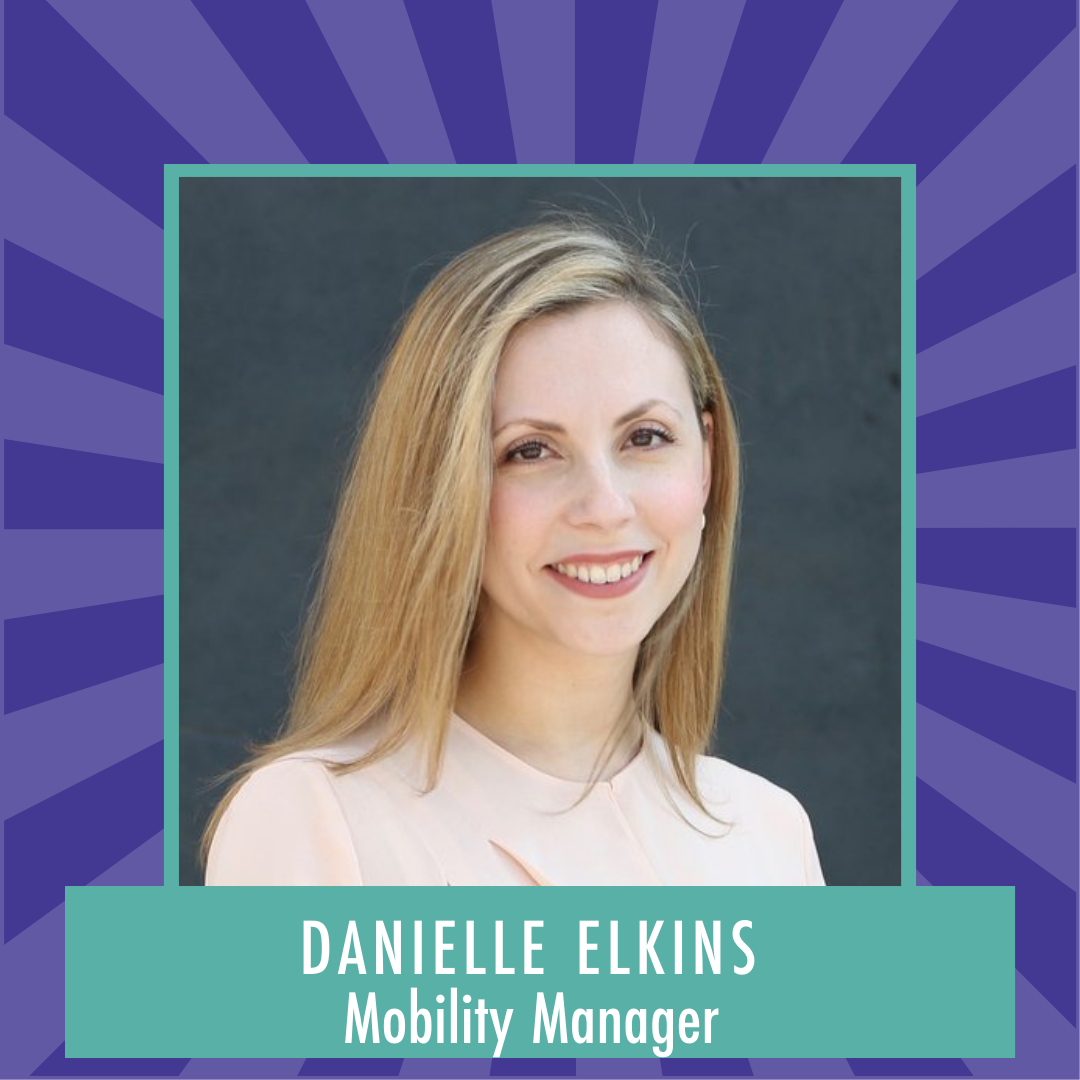
Herocrats Spotlight: Mobility Manager Danielle Elkins

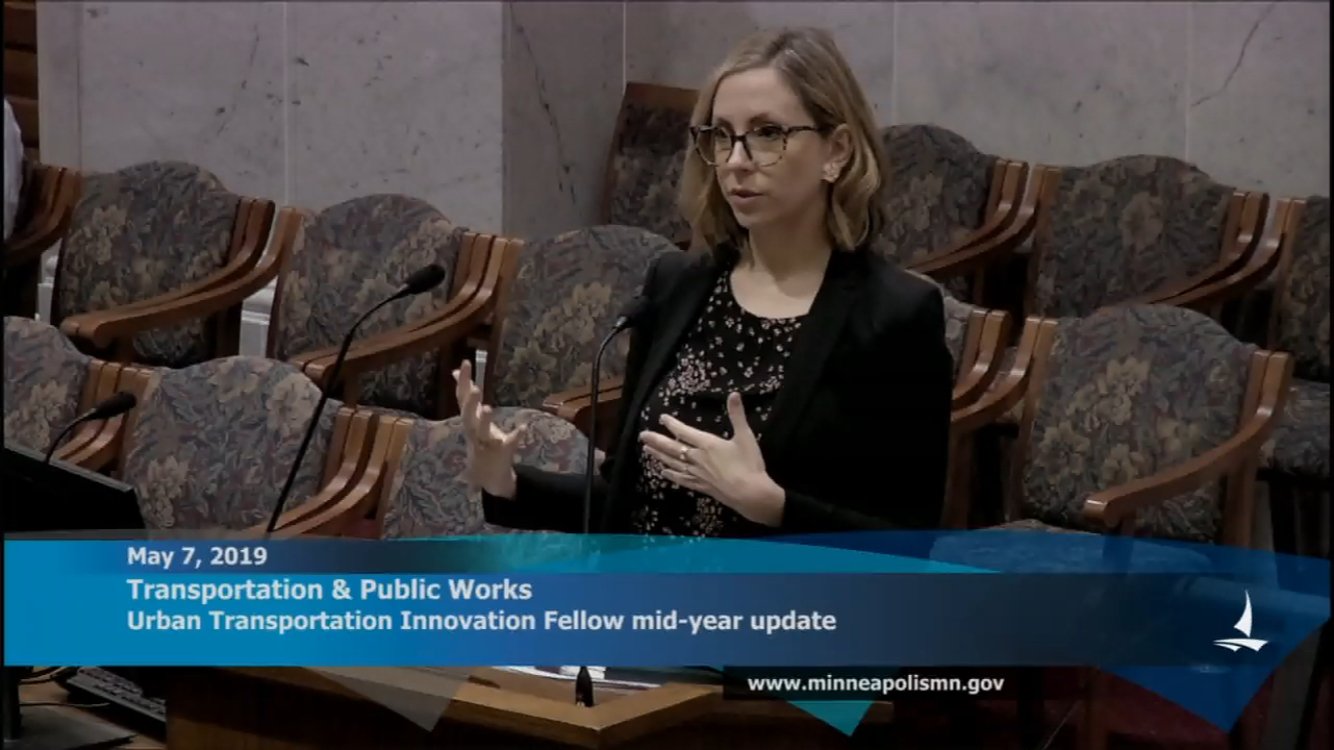
Danielle Elkins is the Mobility Manager for the City of Minneapolis, where she reviews mobility and transit technologies that are hitting the market, and determines if they are a good fit for the City’s mission. In her work today, Danielle juggles the dissonance of ever-changing technologies with government policy change. 

“We have a public works department that was created 150 years ago. How do you adapt something that is 150 years old to things that are changing on a six month, one year cycle now?” 

“After ridehailing launched in 2010, companies started coming to the US Conference of Mayors and National League of Cities looking to preempt cities out of regulating them. In these rooms I saw how these tech companies were treating government officials, and I saw a lack of understanding of government and how it works. I was like, ‘something is wrong here’.”

“People hate change, and everything I've ever done in mobility policy is preparing for and reacting to changes, whether it's working on projects like a high speed rail program in California, or developing new mobility programs in Minneapolis. You're also fighting an internal perception that you are changing people's jobs, and a lot of people get uncomfortable. Meanwhile, the public sees the changing landscape that the market is pushing for, and can get really angry about who they think is bringing about that change, when most of the time the government is just responding to market forces.”

“So much of this anger is rooted in fear because this work is so complicated, and it is changing so quickly. Our ability to articulate these changes to the general public has been a struggle particularly because our strength in government is not storytelling or communications. Our job now is to try to find ways to explain these changes to the public. This is a modern challenge across government, that as things become more and more complex, our current systems are not set up to handle it.”

“We need to be okay with admitting that change is going to keep happening and that we will never know 100% of what is coming. If we know what our goals and our outcomes are going to be, and if we stay aligned on anything that comes our way, we can handle it.”

Nominate a Herocrat and Get Coffee on Us!

Bellwether wants to send you funds for a free coffee when you tell us about a government employee that deserves the spotlight! It’s simple! All you need to do is nominate a Herocrat through the form on our website!

What makes someone a Herocrat?

Herocrats are government employees at all levels of government who risk their livelihoods to fight systemic injustice. They use their superpowers of courage, connection, and creativity to build an equitable and safe world in which everyone can live their best life. We especially like to feature folks that work behind the scenes and might not always get the recognition that they deserve in their government role.

This giveaway is open to the first 10 Herocrat referrals.

2021: A Year of Herocrats Working Hard in their Communities!

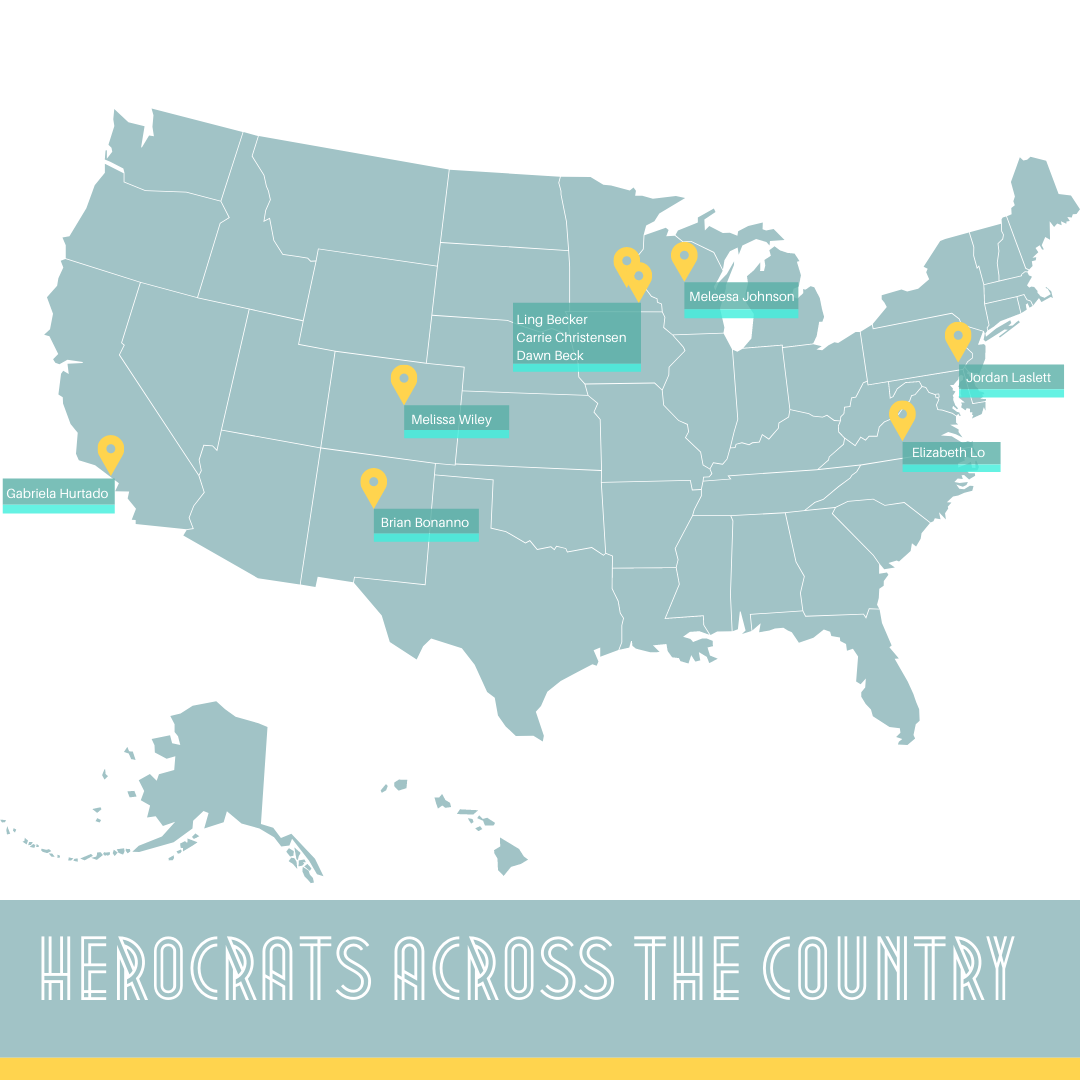
This year, Herocrats across the country led with courage, creativity and connection in their communities. From public health officials, to IT directors, we are excited to cheer on our 2021 Herocrats, who are putting in the work to make their communities a better place for everyone!


Here’s a glimpse at the work Herocrats have been doing in 2021:

  • Dawn Beck shared her personal experience as a child of an incarcerated parent at her job in Olmsted County, MN to advocate for children and families affected by incarceration. 

  • Ling Becker managed her 80 member team to ensure effective and equitable dispersal of CARES Act funding.  

  • City Planner in Albuquerque, NM, Brian Bonanno applied his non-profit experience to engage community members in local government decisions. 

  • Using a unique participatory policy making process that included a design team of Minneapolis high schoolers, Carrie Christensen was integral in the development of the Minneapolis “Parks for All” plan, which was approved this November. 

  • Medical Countermeasures Coordinator Gabriela Hurtado took the lead in the City of Long Beach pandemic response.  

  • A City Councilperson for Stevens Point, WI and Director of the Marathon County Solid Waste Department in Marathon County, WI, Meleesa Johnson leads with strategy and compassion in her roles as a government employee and elected official. 

  • Jordan Laslett used extra time in his AmeriCorps service term to make the case for paid internships in the City of Philadelphia. 

  • IT Director Elizabeth Lo works with her team weekly to catch 30,000+ fraud attempts and protect the data and communications of Bedford County, VA. 

  • Deputy Administrator in Erie, CO, Melissa Wiley promotes courage in her fellow government employees by creating a space for others to share their own story and leading with empathy. 

Do you know a government employee that deserves to be recognized as a Herocrat? Nominate them!

Nominate a Herocrat!

2021: A Year in Review for Bellwether Consulting

Happy holidays from Bellwether Consulting! We have so much gratitude for our community of changemakers, and the work we have been part of in 2021.

Our Team

  • We added a full-time employee to the team! Welcome, Mike Bell!

  • We rounded out several projects with our dynamic and super-talented associates Joanna Hubbard-Rivera, Vincent Frazier, Rachel Speck, and Rachel Brummel!

  • We brought on Piper Wood to lead communications efforts such as this one!

Our Work

  • We partnered with the Humphrey School of Public Affairs to build leadership skills among 36 senior leaders across the State of Minnesota through a 10-week program.

  • We worked with regional partners to build and operate a Federal Funding Hub, and helped to secure a Build Back Better Regional Planning Grant.  

  • We did two cohort-based workforce projects with the Department of Labor and Industry:

    • An intensive DEI workshop that brought together changemakers from 27 companies to discuss strategies, share experiences, and produce action plans, and

    • A comprehensive Train-the-Trainer workshop aimed at building up equitable training infrastructure and best practices at 22 healthcare and manufacturing companies.

  • We supported an assessment of the Minnesota Department of Human Services’ Integrated Service Delivery. 

  • We conducted focus groups and interviews with people experiencing homelessness, people with a history of incarceration, refugees, and other Ramsey County residents to understand and document their barriers to wellness.

  • We featured 9 Herocrats from 7 states who are leading with courage, creativity and connection in their communities.

What’s Next?

Our team is energized for the work that we will be a part of in the new year, and we plan to lean on our “simple rules” in order to see bigger, work deeply, and build more just and equitable communities together in 2022 and beyond.

2021 Worker Shortages: Can Local Government Respond to Changing Work Trends?

“We're pretty, short-staffed- I think we're supposed to have 25 budgeted positions, and right now we are down to about six.” 

Across the country, conversations of worker shortages have made headlines, from short-staffing at minimum-wage food service jobs, to mid-pandemic hospital staff shortages. Government work is not exempt from these labor concerns, and in fact, government agencies across the country are experiencing historical gaps in staffing, even as private sector jobs rebound. We spoke to Brian Bonnano, a former city planner about why shortages in local government positions persist, and what it means for the efficacy of government offices. 

Source: Pew Charitable Trusts using research from the U.S. Bureau of Labor Statistics.

“The city is struggling to hire people- the issue is that the benefits of a stable city job are not as attractive as they once were. Unfortunately, in government work, you're not very well paid. Additionally, some of the other amenities or benefits that people are looking for, especially after COVID, are just not there,” 

Brian sees a disconnect between a younger incoming workforce and the structure of city work, which rewards worker loyalty over sign-on benefits.

“Traditionally the benefit is that if you stay in a city job for 25 years, you get a great pension. The problem is that people don't really stay in jobs that long anymore. There are a lot of other quality of life benefits that they're really looking for. So, if you’re underpaid, and aren’t receiving some of the other benefits either, it becomes really difficult to attract and retain workers. Toward the end of my time with the city, we were posting jobs and getting no applicants. 

This change has also been noted by the Bureau of Labor Statistics, in a recent report that focused on age demographics and job tenure relationships. The BLS found that overall tenure in public sector jobs was twice that of private sector positions, and the proportion of workers over the age of 35 was higher in the public sector than it was in the private sector. 

Not only do these shortages create long-term concern for government agencies, they also put strain on the current workforce, which contributes to worker burnout. 

“In my division it felt like we were getting pulled in a million different directions and we were trying to fill every gap. We could see lots of gaps, but we're overextended as it is. We're short-staffed and it would be better to show people that we were really skilled at one thing instead of trying to do it all.”

As a cycle of public sector workers begin to retire, concerns of worker attraction and retention arise. Will governments be able to meet the interests and demands of a new workforce in time to garner support for resilience building programs? Will there be enough laborers to fulfill the needs of public infrastructure amidst COVID-19 Build Back Better initiatives? Brian is optimistic, but recognizes that significant changes need to happen for this to work. 

“I think they’ll come out of this, but it's going to take some time and it's going to take reorganization, and restructuring the way that city government operates.”

Is your team facing worker shortages? What are they doing to change this?