Guest Blog: What is the impact of a decade?

By Rachel Dungca

1616595811611.png

A decade ago, I presented at work, finished my last class of graduate school at 10 p.m., and a few hours later, gave birth to my daughter. I didn’t know it at the time, but it was also International Women’s Day. Ten years later, I greeted my daughter with “Happy Birthday! Happy International Women’s Day!” We spent the day talking about how lucky I am to be her mom and how happy I am to see her grow up in a time that feels different than when she was born.

The decade brought more visibility for me and people like me in my workplace, industry, and culture. Lately I’ve been reflecting on questions like:

What changed?

How did we change?

Are we changing fast enough?

How will our girls tell their stories when they enter the workforce in decade(s) from now?

A decade ago, I pursued a graduate degree with two babies and some of my most vivid memories are of taking pumping breaks in public restrooms and sheepishly asking for a modified work and school schedule.

Today, my male colleagues announce their paternity leave. I feel the decade-old guilt leave my body. I hope my colleagues have time to recover and connect with their newest family member without snark from peers or delayed promotions from bosses.

A decade ago, I experienced discrimination and harassment. I asked for help and my boss told me that my feelings and perceptions mattered. They didn’t encourage me to file a complaint or acknowledge they’d heard these types of complaints before, but I felt good because I think they believed me.  

Today, I don’t use the words ‘sexual harassment’ when describing my experiences; it jumps to discussions about a system that defends intent and ambiguous language without acknowledging context or the long-term consequences of these conversations. I gather my courage and report experiences on behalf of others and myself; it is the very first time in my career that I can write things down and know it is stored in a database. I feel empowered knowing my simple act may prevent the next person from being dismissed with an eerily familiar story or eliminate the excuse of ‘no one told us why’ women are persistently undervalued, and men are overrepresented.

Photo by Arièle Bonte on Unsplash

A decade ago, my appearance was regularly noted and my gender was considered when my coworkers were searching for a place for frustration to land softly; their words took oxygen that should have been used for recognizing or constructively criticizing my work. I heard from men and women: “I bet your mom is hot!”; “I couldn’t believe how a little person like you could get so big! Did you gain 80 pounds?!?”; “You are a hemorrhoid and your work is going to cause me a heart attack.”; “The vendor called me and told me you were a bitch for not recommending a contract renewal and documenting their ineffectiveness.” I felt awkward, embarrassed, and unsure on how to respond because I knew that accommodating the other person’s insecurity and sexism were more important than my professional reputation, or ability to contribute to a better transit agency. I didn’t yet understand that my work didn’t stand alone; my face, body and gender were always next to it.

Today, my reputation is built with my voice and my work; the quiet, attractive face has been replaced by a passionate and experienced voice. I say aloud in response or in anticipation of being underestimated or ignored: “Yes, I manage direct reports that code every day, just like Joe.”; “This behavior is unprofessional and is damaging our ability to work together in the future; let’s talk.“; “Of course I am emotional when discussing systems that result in our coworkers and community being undervalued, underrepresented or harmed.” I am angry and frustrated, but I won’t break my composure or resolve in rooms full of faces that communicate confusion or ignorance. I spend time questioning my approach, tone, and actions that may threaten my ability to share my team’s work and contribute to a mission I love.

Photo by Steve Johnson on Unsplash

A decade ago, I was complimented by my ability to lead in the organization without flirting to gain favor or hiding my role as a mom. I didn’t intentionally seek out friendships at work with women or people of color. I worried that I wasn't as fun as the flirtatious coworker nor as committed as women without kids.

Today, I receive my first formal internal recognition hosted by an employee resource group focused on advancing women which I had cofounded years earlier. Organizational leaders don’t appear aware of the irony that they clap for exceptional employees that represent many ‘firsts’ or ‘only ones’, while dodging responsibility when asked what they will do to improve retention rates and a workforce where fewer than one in four are women. I wonder how many times these leaders were the ‘first’ or ‘only one’ to advocate for the women they now applaud in quiet conversations about succession planning or pay equity. Women at work are often responsible for being excellent, recognizing excellence and providing a support network to help shore up declining retention while remaining satisfied to be unusual sightings in the halls of management and official recognition programs.

A decade ago, I wondered how much wealth - incomes, position count, budget control - was held by women in my workplace. I never asked and I wasn’t sure it mattered for my success.

Today, I’m an expert in an industry that, at its best, provides mobility and access to opportunity. I wonder how much worth is provided and held by women and people of color without the corresponding wealth in my workplace and in our communities. I keep asking because it most definitely matters for all of us.

A decade from now, our courage to act quickly and boldly in response to our shortcomings and failures will be noted. My multi-ethnic, multi-talented daughter will be telling that story.

rachel headshot.jfif


Rachel Dungca is a Herocrat, a mom, and a manager working in public transit.

Herocrats in Action: Carrie Christensen

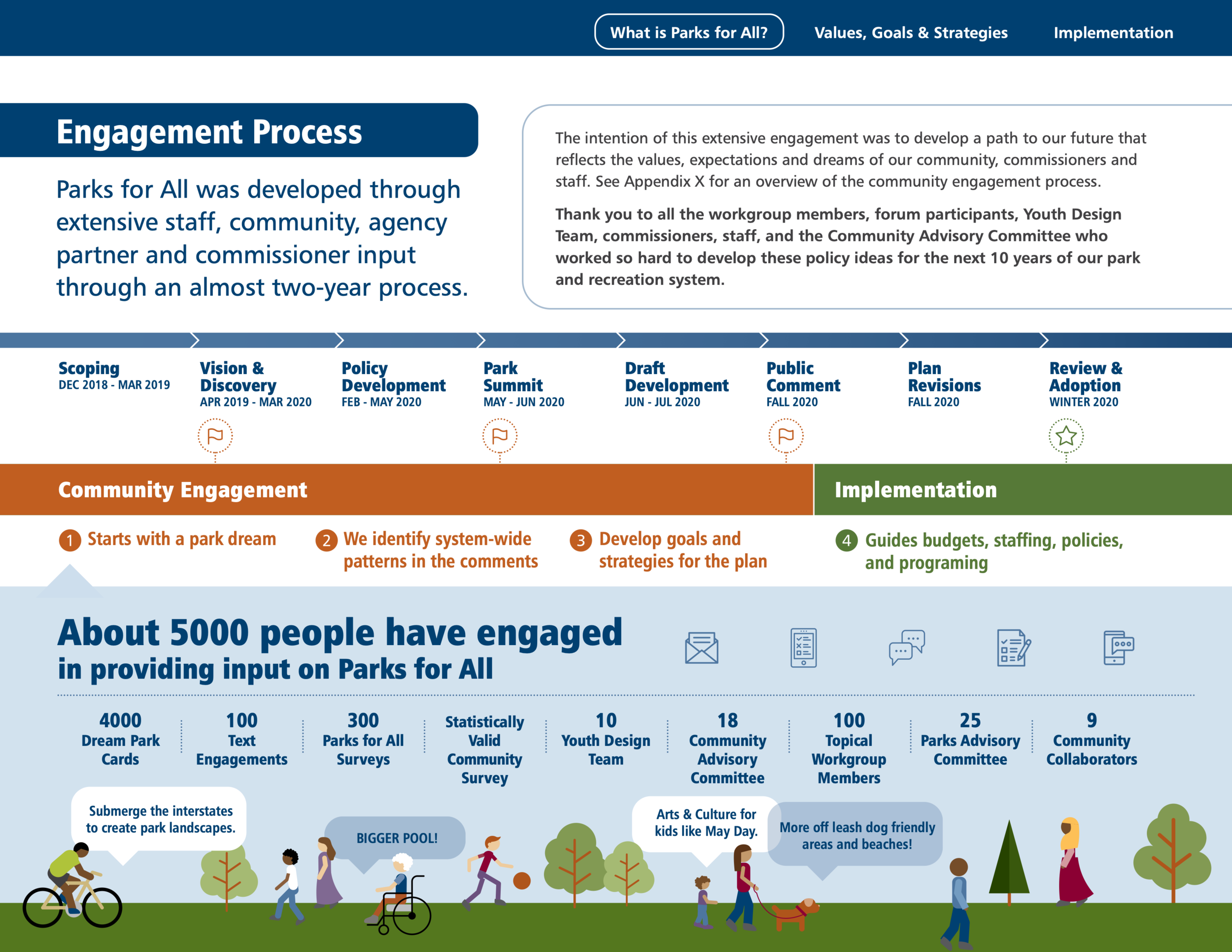
Carrie Christensen has been doing work at the the Minneapolis Park & Recreation Board (MPRB) that would be considered bold and innovative under regular circumstances. Given the crises in 2020, it’s even more remarkable. At a time when policymakers and community members can barely think beyond the most urgent issues in front of them, Carrie and her team have engaged around 5,000 people to create Parks for All, the long-term vision for Minneapolis’ parks and recreation system.

I interviewed Carrie to understand how she she did it. Here are some excerpts from our conversation.

How long have you been at the MPRB and what have you been working on there?

In April, it will be my 4 year anniversary! My work there is focused on park master planning, community engagement, interagency coordination on transportation related projects, and have been the staff lead on our comprehensive plan. After working as a consultant around the country for several years, it has been satisfying and grounding to focus my work in my own community.

What is Parks for All, and why is it important?

Parks for All, the Minneapolis Park and Recreation Board 2021 Comprehensive Plan, sets the agency policy priorities for the next decade of the Minneapolis park and recreation system. It is based on input from community, staff, organizational and agency partners, and elected officials.  

 How did you go about the process?

 I like to think of it as a participatory policy making process.  It involved many many voices and authors, with 1000s of people’s input. While it had its deep challenges working on a plan amidst a pandemic and social unrest, I think it also was an important backdrop that emphasized some of the historic inequities in our system that we want to dismantle in the future. This is a policy moment. MPRB’s comprehensive plan is an important container for policy change locally where we can apply things we learned, remembered, or saw amplified in the past year.

engagement MPRB for web.png

 What else is different or new about this plan?

We also hired youth to staff the project. We call them the Youth Design Team. They were an amazing group of high schoolers from across Minneapolis that became experts on Minneapolis parks and rec and had a great impact on the plan. They made policy recommendations, facilitated community engagement, and generally provided critical thinking and creative style to the process and plan. We’ve also worked with some really talented local graphic designers, Keiko Takehashi and Background Stories, who have been amazing at helping us make the document welcoming and fun to read – which is really important when the audience is so broad!

 What has been most challenging in developing the plan? What barriers did you encounter?

It’s been challenging to engage leadership throughout the process, especially in the past year with COVID, since their plates are so full and like so many other public agencies are focused on being reactive/responsive to the challenges locally and internationally. Comprehensive planning, on the other hand, is a very proactive and intentional mode of decision making. Our team has worked hard to foster a creative, inclusive, and data-driven plan for our future.

 What about it has been positive?

We have deeply engaged with community, staff, leadership, and agency partners, centering equity in the process. I am a firm believer in the idea that the more diverse perspectives you have working on an issue, the more effective and innovative the solution will be.  While thousands of people have engaged in the plan, over 120 people actually helped write the plan from a range of disciplines, ages, ethnic/racial identities, and roles.

Future MPRB for web.png

Herocrats use their superpowers – connection, courage, and creativity – to lead change. Which of these did you draw on? Can you give an example?

Oh, all of them! I’m so grateful to have the Herocrats language to help me name the important ingredients in the recipe for navigating complex systems (and not burning out!)

What else would you like to add?

For information about the process and to check out the draft plan, visit bit.ly/MPRBCompPlan. The public comment period is open until July 18, 2021.

carrie headshot.jpg

Carrie Christensen is a Senior Planner at the Minneapolis Park and Recreation Board, where she works on park policy, design, and community engagement.With a Masters of Landscape Architecture from the University of Minnesota and a B.A. in Urban Studies from Stanford University, her cross-sector work combines facilitation, design thinking, community organizing, project management, data analysis, curation, planning and environmental design processes.

Carrie is a published author, an adjunct faculty at the University of Minnesota, a 2001 Fulbright Scholar, a 2010 Creative Community Leadership Institute Fellow, a 2019 Herberger Institute Practices for Change Fellow, and has consulted with communities across the country around strategic planning, creative community engagement, and resilient design.

Are your colleagues resisting community engagement? Try these constructive comebacks.

meeting.jpg

Photo by Christina @ wocintechchat.com on Unsplash

Herocrats know that better community engagement is an essential strategy to advancing equity. Yet, when they try to do it, fear-based excuses start to show up. When that happens, Herocrats need an affirming way to engage these concerns.

Check out our 1-page guide for 14 phrases that can help you do that.

What can we learn from 200 letter-writing government employees?

There is an ugly tendency among some public servants to give up their power. This segment of government employees chooses to focus on constraints instead of opportunities. They speak about the limits of their positions and agencies, rather than flexing their levers of influence to advance equity in the communities they serve.

I call these folks “If Onlys” because they have many excuses for playing it safe.

“If only I were a manager.”

“If only I had more direct reports.”

“If only our elected officials understood the issue.”

“If only [other government agency] would cooperate.”  

If Onlys subscribe to the myth that they are powerless to improve the systems they operate.

This myth is not intrinsic among government workers; it is taught. How many bright-eyed, ambitious young people have entered public service, just to be knocked down by seasoned employees who see it as their job to educate them about why nothing can be done?  While this sentiment may be veiled as pragmatism, it is ultimately a self-fulfilling prophecy.

If you think you are powerless, you will be.

It is also a cop-out designed to absolve oneself of the responsibility to change the inequitable systems in which they work -- and from which they collect their paycheck.  

While If Onlys are responsible for their actions, they are also a product of the system. Organizations’ incentive structures reinforce their behavior, thereby helping to maintain the status quo. Awards and promotions tend to go to people for longevity, not for rocking the boat.

Fortunately, only a subset of government employees are If Onlys, and it’s a condition that can change with insight, support and policy. Anyone who has worked in the public sector knows there are people on all levels who do what they can --within their existing power-- to improve the ways their organization does business. I call these people Herocrats, and I believe they are an essential component to creating more just and equitable communities.

A recent example: after Minneapolis Police murdered George Floyd, Metro Transit bus operators took a stand. Their union, the Amalgamated Transit Union (ATU), issued a statement demanding justice for George Floyd and an assertion of the rights of its members to refuse to transport demonstrators who have been arrested, calling it a “misuse of public transit.”

Last week, some of these same bus operators joined with hundreds of their fellow employees on a letter to Metropolitan Council leadership calling for accountability around racial justice and recommending a list of actions “toward healing and rebuilding of our region.” The letter’s ideas are expansive, ranging from centering BIPOC voices in decision-making, to vast changes in the Metro Transit Police Department, to more effective operations during civil unrest.

None of these ideas will be new to Metropolitan Council leadership – community members have been pushing for many of them for years. But this is the first time that employees have supported the changes so publicly. It is this kind of solidarity between community members and Herocrats working “on the inside” that will change entrenched systems to better serve everyone.

Looking back over recent years, connections between community and internal changemakers are what drove system change. As the Metropolitan Council staff letter points out, “our more significant changes [towards equity] came from uncomfortable and critical public comment.” It then cites the example of Better Bus Stops, a grant-funded program that engaged thousands of community members to transform the system of bus shelters. Not only did this partnership result in hundreds of new heated, lighted bus shelters in low-income neighborhoods, but it also changed the inequitable criteria for determining bus shelter placement.

To make systemic change, Herocrats need active community involvement, and vice versa. Even with a solid inside-outside game, the work is difficult and uncomfortable. With no meaningful connection with the people being served, it is virtually impossible. As the Metropolitan Council staff letter points out, “we’ve engaged in [internal reviews and introspection] before with no meaningful or longstanding results.” Lacking outside accountability, ideas, energy, and resources, these initiatives just faded away.

The Metropolitan Council employees who wrote and signed the letter learned from these experiences and crafted their approach accordingly.

We, too, can learn from the moves they have made. There is so much work to do to make our systems more equitable, and every public servant has a role to play. Of course, not every situation calls for a public letter like this or a community partnership like Better Bus Stops. So, here are some broader lessons changemakers can take from this example:

  • Recognize your existing power. The writers and signatories of this letter do not have the most “positional power” in the organization, as defined by their locations on the organizational chart, the size of their budgets, or the number of direct reports. But they recognized they had other types of power, including “information power” about the organization’s policies and practices and “relational power” through a network of trusting relationships.

  • Summon the courage to act. Knowing their power, these employees made the decision to act. It took courage to write and sign this letter. But courage is also relative, depending on where one sits. A white person who no longer works at the organization, like me, had little to risk in signing this letter. On the other hand, a Metro Transit police officer or employee within operations risks much more by aligning with this effort. Despite that, employees from across the organization stepped up and signed on.

  • Connect with others. The letter writers knew they needed to make a statement, but initially did not know exactly what it should say. What they did know was how to figure it out: by connecting with a variety of people inside and outside the organization. They launched a massive organizing effort to set a strategy, develop the letter content, and collect signatures. One organizer, alone, had phone conversations with 15 people to surface ideas. They also did their research, identifying other transit agencies that have made similar changes already.

  • Find creative solutions. From the beginning, our government systems have been cleverly designed to systematically benefit a segment of the population, particularly land-owning white males. Therefore, it will take just as much (or more) creativity to remake them. In this case, the letter writers knew they needed to identify solutions that could be embedded in policy and programs, outlasting individual leaders and staff members. To this end, the actions are measurable and geared to increased public accountability.

While none of us can make a public servant recognize or use their existing power, we can work to recognize and act on our own opportunities. What is one thing you can do this week? Here’s an idea: attend the Metropolitan Council’s Committee of the Whole meeting on Wednesday, July 1 and share your ideas for creating a more racially-equitable region.  

Making a strategic investment in public servants

Image from AmeriCorps

Image from AmeriCorps

This post is Part II of II. Part I focused on why now is the time to make a historic investment in public servants.

COVID-19 has exposed weaknesses in our social and economic systems. With 85,000 fatalities to date and the death toll rising, it is clear our public health system was not ready to meet a challenge like this pandemic. Nor has our social safety net been able to deliver the relief that individuals, families, and small businesses need to survive this crisis.   

In the previous post I argued that we will need big, bold ideas to recreate and rebuild our systems into something that serves everyone better. And we will also need people to do this work -- government employees who are courageous, creative, and connected to the communities they serve, AKA ‘Herocrats.’

With COVID-19, we need Herocrats now more than ever. But where and how can we make the investment that is needed to develop them?

With the economic slowdown, tax revenues are way down, which means government budgets are being dramatically cut. The type of programs that develop Herocrats – paid internships, leadership development cohorts, fellowships – are being reduced or canceled completely. All Peace Corps volunteers were sent home in March. Summer intern positions in local and state government have been called off. Not only are budgets tight, but it is difficult to deliver these programs virtually because they rely on relationship-building, observation, and on-the-job training.

Yet, it can be done. It will just take creativity to figure out the model, and courage to make a significant investment.  

Proposals are on the table to rapidly expand existing service programs like AmeriCorps to manage the epidemic and safely reopen our economy. This action would not only help with short term needs like expanding testing, conducting contact tracing, and stemming unemployment. It would also give hundreds of thousands of people a potential ‘foot in the door’ and skill-building for future careers in public service.

This kind of sweeping action is needed on the national level. But we don’t have to wait for Congress to act in order to apply similar concepts at the local and state levels. Here in Minnesota we already have a solid infrastructure of public service programs that serve different populations and purposes. Some of the prominent ones include:

  • StepUp and Right Track programs place thousands of high school students and other youth in paid internships in local government agencies and with other employers. These programs build young people’s careers while also diversifying and strengthening organizations.

  • Urban Scholars places college and graduate students in paid internships in government agencies, helping them to explore potential careers in public service. Program participants also get mentoring from senior leaders in government. Since 2012, Urban Scholars has grown from placing just eight students to developing over 100 scholars each summer.

  • Capitol Pathways is a program by the Citizens League that places college students of color in paid internships with government offices, nonprofits, corporations, and law firms where they can gain experience and build relationships in and around the Capitol.

  • Nexus Community Partners’ Boards and Commissions Leadership Institute is a 7-month leadership program that supports, trains and helps place People of Color and other underrepresented community members on city and county publicly appointed boards and commissions. In these roles, community members are able to influence and impact equity in the Twin Cities Metro Area in economic development, health, housing, transit and workforce development.

Image from https://www.solid-ground.org/

Image from https://www.solid-ground.org/

In addition to these nonprofit- and government-led programs, colleges and universities do much of the heavy lifting to prepare people for careers in public service. Here in the Twin Cities, we have several first-class graduate and undergraduate programs in public administration, public affairs, and related fields.

Within the Humphrey School of Public Affairs at the University of Minnesota, the Master of Public Policy and Master of Urban and Regional Planning programs produce dozens of future Herocrats each year. Students in these programs participate in internships, which provide valuable hands-on professional development (and usually, a wage). But given the upheaval caused by COVID-19 this year, a Humphrey School administrator reports that paid internship opportunities for students with public agencies have decreased significantly.

Beyond these Minnesota examples, similar programs are also training Herocrats throughout the country. And in addition to the well-known national programs like AmeriCorps, Teach for America and Peace Corps, there are smaller but powerful programs like Coro Fellows and the International City and County Managers’ Association’s (ICMA) Local Government Management Fellowship.

As someone who has benefited from two of these programs -- I am a returned Peace Corps Volunteer and Local Government Management Fellow-- I know how they can affect the trajectory of a life and a career. But I also believe that when taken together, over years, these programs can make a positive impact on our country. By shaping the people who are operating and reimagining our systems, these programs change the shape of those systems.

While it may be tempting to dial these programs back in a crisis like this, now is the time to invest in them more than ever. Here are some ways you can be part of that effort:

  • Make a donation to any of the programs listed above; each organization can accept gifts to support these specific programs. Revenues are falling and budgets are tightening for all types of organizations. Your donation can help to ensure that people have opportunities.

  • Contact your elected officials to express your support for legislation that invests in public service while also addressing COVID-19 challenges.

  • Volunteer through your local government. Here is the Twin Cities both Ramsey and Hennepin Counties provide volunteer opportunities.

  • Encourage others to consider public service, either through the programs mentioned above or by directly applying to job postings.

  • Show your appreciation to the Herocrats in your life, whether that means sending a note to an acquaintance who is a public servant, or simply by thanking your bus driver or mail delivery person.

In uncovering our systemic weaknesses, COVID-19 has also reminded us where to apply our collective strengths. Public service programs are one strategic place to start.

After COVID-19, who will rebuild the house?

Photo by Roan Lavery

Photo by Roan Lavery

Many of us are still trying to make sense of what is happening in our world, and what our place might be in a better future. Especially for people who worked for systems change before the pandemic, Arundhati Roy’s conclusion to her April 3rd article is a rallying cry:

Historically, pandemics have forced humans to break with the past and imagine their world anew. This one is no different. It is a portal, a gateway between one world and the next.

We can choose to walk through it, dragging the carcasses of our prejudice and hatred, our avarice, our data banks and dead ideas, our dead rivers and smoky skies behind us. Or we can walk through lightly, with little luggage, ready to imagine another world. And ready to fight for it.

As this global pandemic continues to shake our country to its core, it also opens opportunities that were previously unavailable. Ideas once considered ‘fringe’ are now on the table, and some are even being tested. If you told me on New Years Day that in a few months, most Americans would be working from home, having collected stimulus checks, and that they would be able to bike or walk down public streets that had previously been reserved for cars, I would have been skeptical. But here we are.

COVID-19 is testing our systems and revealing their weaknesses. Most notably, it is demonstrating that the public policies that systematically privileged whites and middle/upper classes have an enduring legacy. Death rates from COVID-19 among Black and Hispanic people are substantially higher than those for whites or Asians. Along with this, long-standing structural inequities are harder for the mainstream to ignore because they are now affecting all of us. Leave it to a virus to clearly demonstrate how our fates are intertwined.

With our metaphorical house burning down, many of us are asking: What do we build in its place? From universal basic income to universal health care, there are lots of big ideas out there. Now is the time to discuss them.

And at the same time, we need to think ahead to implementation. How will we put the big ideas --whatever they end up being-- in place? Who is going to build our new house? Do they have the skills? How do we prepare the site for construction?

This is systems change we are talking about, and systems don’t change themselves. In fact, through the force of inertia, they often stay the same. To reimagine and rebuild our country, we will need talented people in every sector working together to change these systems.

Within government, this will require a commitment to developing the public workforce, and I’m not talking just about growing the number of government employees (though with the impending ‘Silver Tsunami’ we will need to attract a lot of new people to public service). It is also about the qualities of those employees.

To rebuild our systems, we will need  government employees who are courageous, creative and connected to the communities they serve – the kind of government employees known as ‘Herocrats.’ Here’s why these qualities will be especially important in recreating our systems after COVID-19.

It will take courage for Herocrats to speak the truth about the inequitable systems of which they are a part. This truth-telling will upset the power structure they inhabit and potentially threaten their positions, and even their personal well-being.

It will take creativity to imagine how government policies, programs and practices could be more equitable, and to figure out how to collaborate with other people, systems and cultures to make things work for everybody.

And the public servants who can do this will be those who draw on strong connections with their own sense of purpose, as well their connections with the communities they serve. Every successful effort to build more equitable systems will include the participation of the people who are most impacted by those systems.    

Now is the time to make a New Deal-scale investment in developing Herocrats. This will serve short-term needs like combating unemployment and delivering urgent services. But more importantly it will enable us to make the longer-term structural changes that are needed for our country survive our next big challenge.

In this time of billion-dollar budget shortfalls and calls for layoffs, such a proposal may seem far-fetched. But other previously unthinkable things are now becoming a reality. As Ms. Roy pointed out, now is the time to imagine another, better world and prepare ourselves to fight for it.

This post was Part I of II. The next post will address some ways we can make this historic investment in Herocrats happen.


Herocrats are more essential than ever.

Across the country, elected officials are making tough policy decisions about how to respond to the Coronavirus pandemic. They hold regular press conferences to announce efforts to lessen the impact of the virus. For example, here in Minnesota, the levelheaded leadership of Governor Walz has provided comfort and resources to people across the state.

And behind every good governor, county commissioner, and mayor are thousands of public employees who are working around the clock to put the changes into place. Quickly adapting a government bureaucracy to a global pandemic is no small task. These are entrenched systems that weren’t built for the rate of change we’re facing today.

This is why Herocrats are more essential than ever. Herocrats are government employees who use their superpowers of courage, connection and creativity to adapt their agencies to a rapidly changing world. Without Herocrats to figure out how to get it done, the assurances of elected officials would be meaningless.

The State of Minnesota’s #StayHomeMN logo in Somali

The State of Minnesota’s #StayHomeMN logo in Somali

Like everyone else, Herocrats are scared. Yet, they are showing up and bringing help to the people who need it:

These are just a few examples of how Herocrats are putting their superpowers to work in this crisis. How is COVID-19 affecting your work in state or local government? What types of innovation and adaptation are you witnessing?

Do we really need an app for that?

Last fall, Governing Magazine closed shop. For over 3 decades it was the go-to source for news and analysis of state and local government. Since then, its online presence, governing.com, has survived. But it shrank its focus to “what state and local government looks like in a world of rapidly advancing technology.”

I don’t know what factors went into governing.com’s decision to focus on technology. But I doubt it’s a coincidence that large tech companies – many of whom support governing.com – reap big profits in government technology contracts.

I, too, am interested in the impact of technology on government. I’ve seen firsthand how antiquated systems hamper efforts to better serve the public. Among other things, we need powerful software to run online services and integrated databases to inform decision-making.

And, if we’re really talking about the solutions that will make government work better for ALL people, technology is only one part of the picture. Yet it dominates government innovation conferences, books and articles. What is sometimes missing is a more holistic exploration of government management and leadership.

A community engagement manager at a mid-sized city told me that she recently returned from a national conference about best practices in public engagement. Afterwards, her inbox was flooded with emails from companies trying to sell her the latest and greatest online tools to engage the public. Her take? Those tools will only amplify the already-loud voices in her community, which could exacerbate existing disparities. What she needs to make happen is face-to-face resident engagement that informs policy and programs.

She doesn’t need an app for that. Mostly what she needs is for her colleagues to be creative and courageous in doing things differently. In this example and others, much of the innovation that is needed in government can be achieved with little or no new technology.

At its core, state and local government agencies face a major human capital challenge: building and maintaining a top-notch workforce. Problems like this, which have to do with how people think and act, take longer to solve than technology ones (and they are more difficult for companies to monetize.) But if we are going to improve government results, we need to focus on building the best government workforce possible.

Of course, this isn’t really an either-or topic. We can be concerned about human capital AND government technology. And the topics are interrelated. With effective leaders and employees, we’ll be able to get the right technology solutions in place. And having up-to-date technology will help government to keep the skilled workers who have lots of career options.

Also it’s important to note that there are a lot of things going right when it comes to government workforce. In my experience, most government workers are smart, dedicated, and in it for the right reasons. They do the best with what they have, even when they get little recognition for their hard work.

That said, government faces some big, potentially unprecedented workforce challenges.  The much-feared Silver Tsunami is here. Baby boomers are finally retiring, leaving jobs for others and taking their experience with them. And with the economy at nearly full employment (for some segments of the population) there’s tough competition for workers. It is especially difficult for government to compete with private-sector wages.

Photo by Matt Hardy on Unsplash

Photo by Matt Hardy on Unsplash

But the people problem is more than a numbers game. Government workers, on average, are whiter and more likely to be male than the communities they serve. People with disabilities are underrepresented. There are many reasons why this mismatch is problematic. For one, it makes it more difficult for agencies to be relevant and connected to the communities they serve.

So in addition to looking at technological fixes, what if we invested at least as much in a world-class government workforce? What if we poured our attention and resources into attracting and keeping Herocrats in government?

Herocrats are government employees who transform their agencies to better serve their communities. They are connected to the people they serve, which enables them to accurately define problems and possible solutions. They have the courage to test solutions out and the creativity to figure out how to institutionalize them in the long run.

To hire and keep Herocrats, we need to change the existing, entrenched systems. That’s hard, slow and sometimes boring work. Much harder than purchasing new technology. It requires us to ‘upset the apple cart,’ adapting our human resources processes and policies to hire people with different backgrounds. It also means finding people who want to change the world but never considered doing it as a government employee.

And it requires us to change our workplace cultures and policies to empower Herocrats, who often feel isolated and unsupported. This means offering professional development opportunities and incentives for employees who drive innovation.

And frankly, agencies need to give Fearocrats, who hold us back from innovation, the hint that it’s time to leave. Senior leaders can set the stage in ways that make Fearocrats self-select out, choosing early retirement or a shift to the private sector.

Ultimately, even if we have the best government technology, if we don’t have the right people running it, we’re in trouble. So let’s keep people – employees and community members – front and center in discussions of government innovation, right where they belong.

My Beef with the "Business Case for Equity" in Government

If you’ve worked in diversity, equity and inclusion (DEI) in the public sector, you’ve probably been told at least once that you need to make “the business case for equity.” This is shorthand for “show me how DEI actions will create economic benefits.”

At its best, “the business case” presents an alternative to well-worn, deficit-based narratives by illuminating the connections between us. “The business case” demonstrates –and sometimes even quantifies-- how exclusionary policies and practices hurt us all through higher costs, inefficiencies and lost opportunities.

We’ve gotten used to observing racial disparities in education, income, and employment and talking about what to do about them. This deficit-based approach is unhelpful for many reasons, including that it presents low-income people and People of Color (POC) as problems to that need be fixed, which is wrong, damaging and counterproductive.

On the contrary, “the business case” presents racial equity as an opportunity for our collective growth, with a focus on leveraging the existing, undervalued assets in our communities.

In this way, “the business case” is a welcome reframing of the issues. It can help private sector businesses understand that DEI is closely related to the bottom line. This is a good thing. But we need to be careful that we don’t lean too heavily on “the business case” framing in government because government is not a business. Public agencies are not profit-driven; they are institutions established for the common good. A focus on the business case for DEI can distort the actions governments take to advance their mission.

Let’s look at some examples. The first one shows how the business case for equity can be helpful in the government context; the second demonstrates its limited applicability.

Example 1: Bus Driver Shortage

operatorhiring_popup_final.png.tmp.png

Metro Transit, the Twin Cities’ transit agency, is experiencing a multi-year shortage of drivers. The combination of retirements and other attrition, along with low unemployment, has made it nearly impossible for the agency to keep all the buses on the road according to schedule. On some days this means that trips get cancelled, leaving customers waiting for a bus that isn’t coming. This results in the loss of customers and revenue (in lost fares).

This shortage has led the agency to think creatively about recruitment efforts, and many of their efforts fall under the banner of diversity and inclusion.  They’ve asked themselves: how can we broaden our pool of applicants? How can we attract and retain diverse bus drivers so that our business can run smoothly again? The agency has used current drivers to participate in recruitment events in their own communities, including drivers from the Hmong and Somali communities. They’ve examined the hiring process to remove opportunities for unconscious bias to unfairly influence it. They’ve taken steps to make their workplaces more inclusive.

Despite these actions, the agency continues to struggle to maintain a full workforce of drivers, and likely will until the economy and larger factors shift. But their diversity and inclusion steps have helped to stem the tide; without them the agency would be in much worse shape. And the fact that the actions didn’t completely solve the problem doesn’t mean that they weren’t the right thing to do. Perhaps the agency simply needs to do more, or different, diversity and inclusion programs for bus drivers.

Example 2: Making Transit Affordable

dmmn733vwaez4rc_orig.jpg

Let’s consider another example from the same agency.

As Metro Transit considered raising fares in 2016, a proposal surfaced to allow eligible low-income people to qualify for a discounted fare. Community and transit advocates raised their voices in favor of this program as a necessary step to allow low-income people to reach their destinations, whether it is school, work, the grocery store or the doctor. They were already struggling to pay the regular fare; an increase would be an additional barrier to them.

As the fare increase gathered a sense of inevitability, the staff at Metro Transit researched program models and created scenarios to predict their impact on the budget and operations. They found that, across all models, the program would be a hard hit on the already-strapped budget. The size of the hit depended on many factors, such as the price of the discounted fare, if it would affect a person’s decision to use transit more, and how many people were eligible to enroll (and how many did).

Intricacies aside, the low-income fare, which would surely provide people access to opportunities, would have a negative impact on the agency’s budget, both in the short and long term. Not only would the agency miss out on the regular fare revenue, but it could affect the large amount of revenue the agency received from counties, which purchase and distribute fare cards to their social services clients. And in the long run, if the program is successful, and low-income people are able to be mobile and get to their destinations, their incomes will hopefully increase. While this is a welcome social outcome, for Metro Transit it often means that people no longer need their services because they purchase a car.

In the end, Metro Transit rolled out the program, which provides $1 transit fares to qualified people. Although no evaluation of the program has been released to the public, it appears that it has been successful in making transit more affordable to the people who most need it, while containing its impact to the budget. It was the right thing to do, and it’s helping people. But if staff had used only a “business case” lens it never would have happened.

Limitations

As the examples show, the “business case” can be applied in government, but it has major limitations. Clearly, it shouldn’t be the only reason for agencies to advance DEI. If decisions are made only through that lens, agencies will miss out on many effective ways they can advance their missions.

Here are some other ways it is problematic:

  • The language is misleading and potentially harmful. “Running government like a business” fails to recognize the fundamental differences in the sectors, including the governance model, mission and metrics of success. It takes the focus away from the people being served and shifts it to money.

  • It’s about putting equity in white majority culture terms. Sure, this can help people who feel unaffected by racism to see the need for action. But let’s call it what it is: self-interest. It’s saying to white people that we should care about racism because it harms us. In the bus driver example, if the agency had not faced a shortage of its usual worker pool –white men with commercial drivers licenses—they may not have done the DEI work at all. In this example, DEI becomes a priority only when other options have been exhausted.

  • Its application is often uneven and reflects the biases of those in leadership, who are disproportionately white men. In my experience, policy and program changes to advance DEI often face a higher level of scrutiny and analysis by leaders. In this way the “business case” supports status quo power structures over innovation and equity. Staff rarely are asked to make a business case for an ongoing program; in practice it is mostly applied to new proposals. Regarding the second example, the same kind of “business case” analysis is not applied to services that already benefit high-income riders. If it was, it would show that the people with the highest incomes pay the least for transit because of programs such as MetroPass. These subsidies to riders who are often white, wealthy and suburban would not necessarily prove to be smart business decisions.

  • The timing is off. Sometimes it will take a long time for the benefits of DEI to bear out. If we are only focused on the solutions that have the most immediate impact on the “business,” we might miss out on those that will have the largest benefit to the mission over the long term.

Alternatives

Despite its limitations, there can be value in showing connections and causal relationships between DEI investments and other goals we care about. But what are those goals? And who defines them?

Here are some ways government agencies can expand their thinking around “the business case” and use it to advance DEI:

  • Use a collaborative, community-engaged process to clearly define the agency’s goals and priorities. Sometimes agencies have too many goals, and it’s not clear what is most important. Other times the staff are focused on goals that are different than the community’s priorities. In the case of Metro Transit, the mantra has traditionally been “ridership and revenue.” While these are important for operations, they do not relate directly to riders’ experiences. More often riders want to know they can get to their destination safely and in a reasonable amount of time. A robust community engagement process can clarify what priorities are most important.

  • Then use these community-driven goals to screen opportunities, programs and policy changes. Apply this lens to everything the agency does, including existing programs. Everything needs to be on the table and DEI needs to be incorporated into all our actions. In this way, the “business case” analysis and an equity analysis become one in the same.

  • Find ways to build empathy and trusting relationships between agency staff and the people they serve. One-on-one interviews and other forms of engagement can provide context and help to interpret data, and inform what data is collected in the first place.

  • Think long-term. Some investments are worthwhile but won’t pay back for a generation or more.

Ultimately the “business case” is only helpful if it opens discussions around the fundamental questions, such as: Whom do we serve? What are our goals? And, how does our community define success?

But too often the “business case” framing has been used in government to benefit those who already hold the most power. So let’s just skip it, get back to basics and recognize that equity is the business of government.

Fearocrats

Herocrats use their superpowers of courage, creativity and connection to adapt their organizations to serve the public better.

But not everyone who works in government is there to change the world. Some people started out there and then lost their OOMPH along the way. Others have other motivations for public service, like the solid pay and benefits.

Below, I’ve compiled a list that describes different types of “Fearocrats,” or people in public service who aren’t yet leading with courage, connection and creativity.

This isn’t about judging our co-workers; it’s about how we can more effectively work together toward shared goals. If we understand our co-workers values and motivations, we can find common ground to get things done together.

And in reality, everyone is complex. I believe that most people are doing the best they can with what they got. There is no purity test for being a Herocrat versus a Fearocrat. The point is that we all can use Herocrats Mindsets and Moves to activate our superpowers. (See the other blog posts for examples).

So here are some of the Fearocrats that I’ve encountered:

 
Picture1.jpg

“If Only”

They are sympathetic to the cause, If Only…

They have many reasons for not acting, many valid. But what their excuses have in common are a lack of research, prodding and exploration. Barriers are taken as fact and passed down as organizational lore.

If only…

We had the authority to do it

The other governmental agency would just cooperate with us

The elected officials would support it

 
Picture2.png

“Doing-my-job-bob“

This Fearocrat can’t be bothered to exert additional energy or brainwaves beyond what is prescribed in their job description, and they read it narrowly.

“That’s not my job.”


“Good Ole Boy”

Picture3.png

This Fearocrat has the power and they know it. They think of themselves as “good guys” and would like to help, as long as it doesn’t threaten their power or position.

“I’d like to help you but I would get into trouble with ______”

 
Picture4.png

“Smarty pants”

They’ve seen the research, and they already know the right answer. They are more interested in looking smart and important than getting anything done.

“Well, actually…”


“the purist”

Picture5.png

This Fearocrat is going to hold out for the ideal solution. They have never heard the saying “perfect is the enemy of the good,” or they just disagree with it.

“It’s not worth doing unless we ______”


“The wearycrat”

Picture6.png

This person would like to support what you’re doing, they’re just tired and worn down. They need a break.

“We tried that 10 years ago and it failed. (SIGH)”


“The arch enemy”

Picture7.png

This type of Fearocrat is extremely rare, but you will know when you encounter them. They are highly motivated against the cause. They will work against you in visible --or sometimes sneaky – ways.

“Sure, I’ll work with you on that!”
[cue lies, backstabbing, sabotage]


Those are some of the types of Fearocrats I’ve encountered in my career. Who did I miss?

Also:

Which ones do you most commonly encounter?

How have you successfully worked together with them?

How can we find common ground to get things done?