Herocrats Spotlights

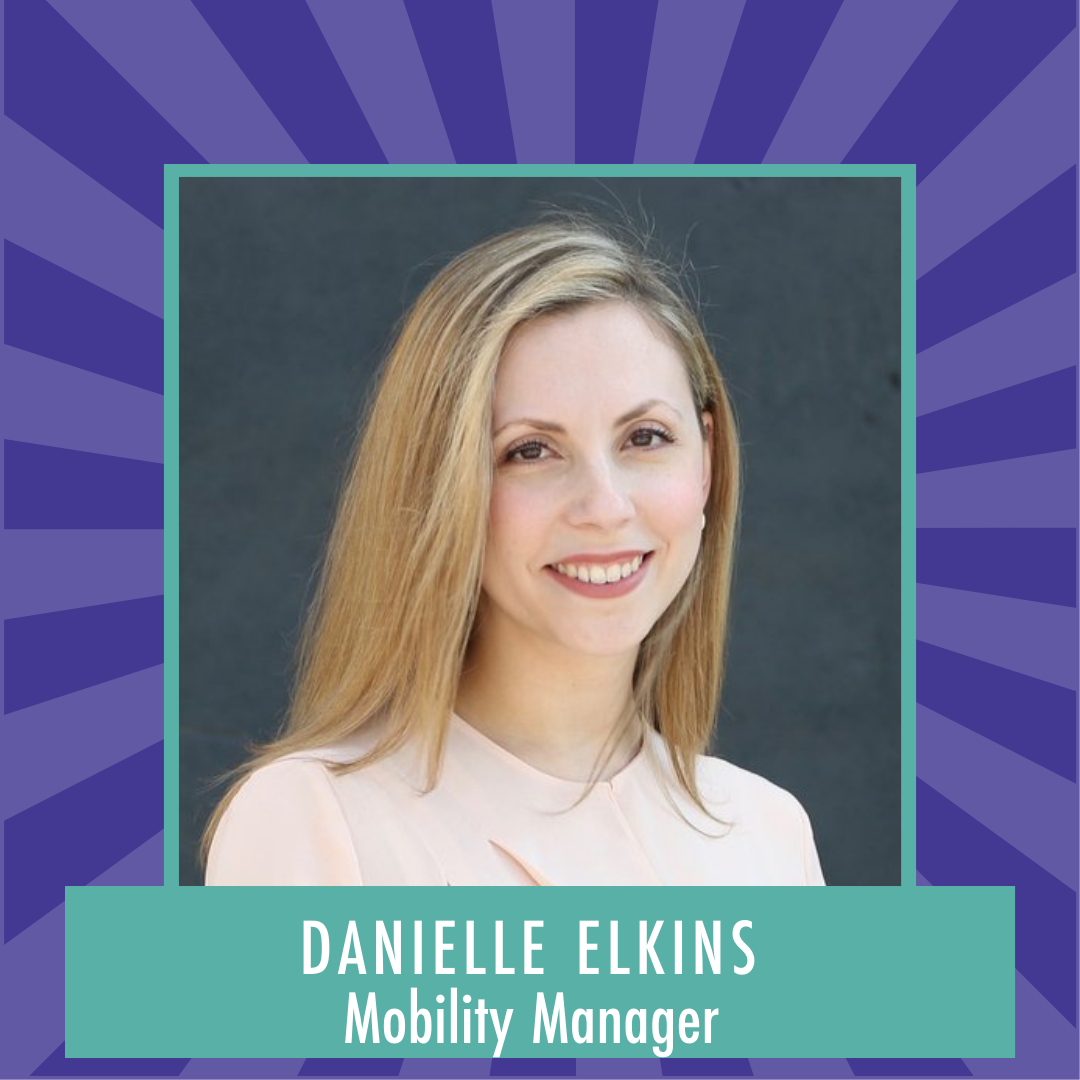
Herocrats Spotlight: Mobility Manager Danielle Elkins

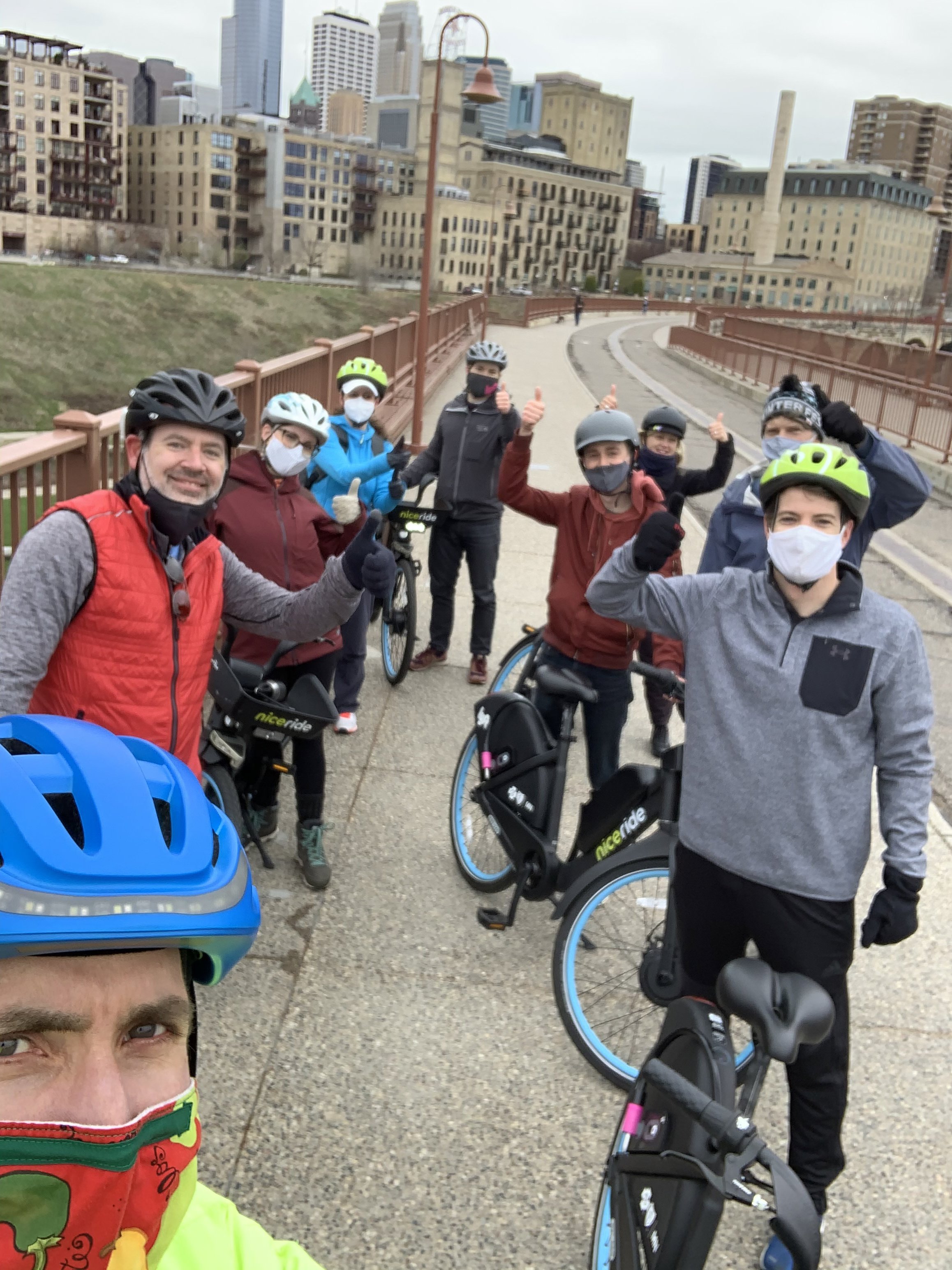
Danielle Elkins is the Mobility Manager for the City of Minneapolis, where she reviews mobility and transit technologies that are hitting the market, and determines if they are a good fit for the City’s mission. In her work today, Danielle juggles the dissonance of ever-changing technologies with government policy change. 

“We have a public works department that was created 150 years ago. How do you adapt something that is 150 years old to things that are changing on a six month, one year cycle now?” 

“After ridehailing launched in 2010, companies started coming to the US Conference of Mayors and National League of Cities looking to preempt cities out of regulating them. In these rooms I saw how these tech companies were treating government officials, and I saw a lack of understanding of government and how it works. I was like, ‘something is wrong here’.”

“People hate change, and everything I've ever done in mobility policy is preparing for and reacting to changes, whether it's working on projects like a high speed rail program in California, or developing new mobility programs in Minneapolis. You're also fighting an internal perception that you are changing people's jobs, and a lot of people get uncomfortable. Meanwhile, the public sees the changing landscape that the market is pushing for, and can get really angry about who they think is bringing about that change, when most of the time the government is just responding to market forces.”
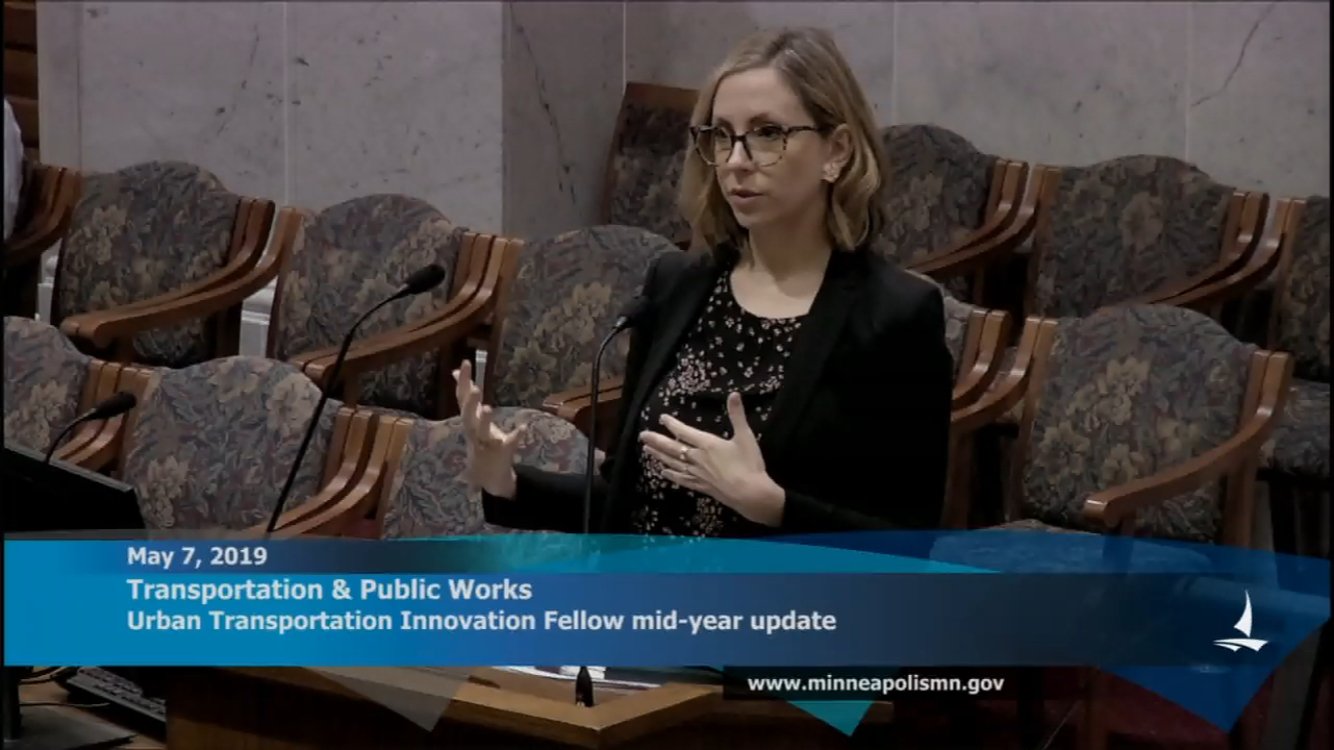
“So much of this anger is rooted in fear because this work is so complicated, and it is changing so quickly. Our ability to articulate these changes to the general public has been a struggle particularly because our strength in government is not storytelling or communications. Our job now is to try to find ways to explain these changes to the public. This is a modern challenge across government, that as things become more and more complex, our current systems are not set up to handle it.”

“We need to be okay with admitting that change is going to keep happening and that we will never know 100% of what is coming. If we know what our goals and our outcomes are going to be, and if we stay aligned on anything that comes our way, we can handle it.”
Herocrat Spotlight: Brian Bonanno's Approach to People Centered City Planning

While we typically highlight current government employees, we recently talked with a former government worker about the importance of cycling in and out of city government work, in order to be an effective changemaker and prevent burnout. Brian Bonanno is a seasoned public servant with experience working in city government and in the nonprofit sector, with a focus on community engagement. 

“I've worked adjacent to local government for most of my career, starting in Chicago. In Iowa, I worked closely with a few different cities, specifically Des Moines, and Dubuque. I came to New Mexico in the fall of 2020, and started working as a planner for the city's behavioral health and wellness division. 

I transferred last spring to the urban design and development division where the city was experimenting with ‘mid-range planning’, a new division created to specifically address difficulty with on-the-ground engagement from city government. Most of my background consists of working with residents, business owners and community organizations to press the city to make changes. This role flipped that around, by employing someone within the city government to do that kind of work out in the community.” 

We talked with Brian about the value and importance of working inside and outside of the system to advocate for justice, and the possible roadblocks that arise within government that make community engagement a difficult practice. 

“I think public servants are getting attacked in a lot of ways from all sides. They're being asked to do a lot with a little- here in Albuquerque, we’re struggling to keep up because budgets are tight and there’s more work to be done in neighborhoods than ever before. The challenge now is that we are trying to do that work with fewer people.

In the planning department we're struggling to meet all of the expectations of the city and the citizens we serve. I think some people misunderstand our role in the community. Sometimes, even the planning department is unsure of their role. That's partly because the nature of the work has changed; there's more of an emphasis on acknowledging the mistakes in planning in the past that have led to inequities and disinvestment and injustice. In the time that I've been there, we’ve started trying to make amends for instances of injustice, like histories of redlining or community disinvestment that planning is partly responsible for. This has been a harder challenge to address than was anticipated. A lot of people don't like to admit to mistakes, they want to keep moving forward with planning and maybe acknowledge these things, but no one wants to take full responsibility.”

We talked to Brian about the work of a city reckoning with their role in historical injustice, and what it might look like for city government to take meaningful responsibility and make amends. 

“Cities tend to move in highly regimented schedules. It's a two year plan, it's a five-year plan. These plans rarely go beyond, five, maybe 10 years. I think cities need to be willing to accept that this work takes a very long time. It took a long time for communities to end up where they're at. It took years, and decades of neglect and disinvestment, particularly in lower income communities. From the government, there’s an unwillingness to dedicate more than a couple of years to solving that problem. What a lot of these communities have lacked is consistency. 

For example, when I worked in Des Moines, the city had their five-year plan. Four years into their plan they said ‘it's not working the way that we expected it to work,’ partly because they weren't willing to be vulnerable to their own mistakes. And this causes cities to pick up and move to another neighborhood or pick up a new project or a new planning idea, and see what else is going on, and what the new planning trend is, and put their energy into a new project.

Brian was recognized as the 2019 "Creative of the Year" by the Greater Des Moines Young Professional Committee for his community engagement work and facilitation of public art projects around the city of Des Moines, Iowa.

If you sit in a place long enough and you open yourself up to be vulnerable and transparent with communities, you are going to reach a better outcome. That was the something I really pushed for in my department- we need to stop rushing. There's always a sense of urgency, but it's in an urgency focused around finishing a project in order to move to the next neighborhood. What I’m advocating for is a model of city planning where we stay a while- get to know people, spend time in communities outside of just going to an event at a library or a community center. Why don’t we talk to our business owners and residents in the community? 

To me it feels like the city planning model isn’t capable in its current form of being the kind of community partner that's needed. The things that I see missing from the system are time consistency, transparency, and sincere community engagement.” 

Brian is hopeful that these trends are changing, both in city government structure and in the higher education programs producing the next generation of city planners- but, at the end of the day, these changes are happening very slowly. Brain shared with us lessons that he learned about the importance of knowing the why of public outreach before engaging with a community, in order to be a more effective resource. 

In city government, it can be really easy to get beaten down and become complacent, and feel like the system wants you to conform. Before I left city government, I tried to impress upon the people that I work with the importance of knowing what you are asking for when you engage with a community. I think there’s often an idea that we just have to get out and talk to people. 

I've been in this situation where I've engaged people and built relationships and had nothing tangible to offer them. Ultimately, that leads to you letting people down. After that, how can you expect them to trust you again? When I consider all of this, I try to focus on how we can hone in on what we are asking the community, and what we can offer the community before we go out and try to create meaningful engagement.” 

Brian will continue to work in community engagement in a new position with a housing non-profit in Albuquerque, New Mexico this winter.

Herocrat Spotlight: Medical Countermeasures Coordinator Gabriela Hurtado

Gabriela Hurtado is a Medical Countermeasures Coordinator for the City of Long Beach, CA. In the past two years, she expanded existing city pandemic preparedness plans to develop citywide testing, and, when the time came, helped create a citywide vaccination effort to serve the 400,000+ community members of Long Beach.  

“To operationalize our plans for the test sites, we basically took our anthrax plan and adjusted it for COVID-19. It's not like it was all from scratch, but we were creative and able to build on that existing knowledge to serve the community.”

Hurtado partnered with government agencies across the city to develop a unified effort against COVID-19, with the goal of creating accessible test sites and vaccines for all community members. 

Hurtado began her career with the City of Long Beach as an intern in 2012, building community awareness of emergency preparedness measures. In the nine years since, she has helped develop the emergency management division; In particular, Gabriela assisted with HIV surveillance efforts, flu vaccine rollouts, and bioterrorism preparedness before focusing in on pandemic preparedness in 2019, and putting skills into practice in early 2020. 

“Vaccines are really my niche so it was exciting when I was able to participate in the vaccine rollout. Vaccination is something that we are really well versed in as a department because we do a flu vaccination every year. We took our plan that we practice every year with the flu vaccine, swapped out the flu, and inserted the COVID vaccine.”

Long Beach Public Health Nurses drawing up COVID-19 vaccines at the Convention Center. Source: Gabriela Hurtado.

Long Beach Public Health Nurses drawing up COVID-19 vaccines at the Convention Center. Source: Gabriela Hurtado.

Throughout a year and a half of pandemic management, Hurtado has juggled the opinions of stakeholders, community members, and public health officials in developing a just pandemic response. 

“I think in all of this, the most difficult part was that for so long we did our job and no one noticed. I think that's a good thing, right? Because that means we're doing our job well. But when COVID-19 happened, all of a sudden everyone was an emergency manager, an epidemiologist, a statistician. I think that was really difficult because our entire team serves as subject matter experts, but then you have politics come into play. And It's challenging when everything on the news or social media is negative all the time. It's so divisive and polarizing that I have to remind myself and our team constantly, ‘we're doing this for everyone else, not just for us’. I think that really helps.

I think that one of the other really challenging pieces is trying to reinstate ourselves as a trustworthy entity. Because we would never ask the community to do something that we wouldn't do ourselves. Trying to navigate that was really difficult; specifically, trying to make sure that all of our communities of color were getting the information and not just getting it, but understanding it and knowing that it came from a trustworthy source. I think those are probably the two hardest parts of this pandemic from an emergency management standpoint.” 

Amidst the myriad of challenges brought on by the past two years as a Medical Countermeasures Coordinator, Gabriela has taken on a role as a public health authority and community spokesperson in the COVID-19 response in Long Beach, CA. 

Command staff that led the Convention Center-Public Health Emergency Management team, Fire Department, and National Guard. Source: Gabriela Hurtado.

Command staff that led the Convention Center-Public Health Emergency Management team, Fire Department, and National Guard. Source: Gabriela Hurtado.

“I've never been in this type of leadership position before where there's so many people looking to me for information or answers. I have to remind myself that a lot of people are going to feed off of my energy. If I'm stressed and overwhelmed, everybody else is going to feel that too. So I have to remind myself that it's okay to have off-days or off-moments, but  just because it's a bad moment, doesn’t mean it's a bad day.” 

I always remember the day that we went down to the convention center and they were like, ‘okay, Gabby what do you want to see? How do you want us to set this up?’ I literally said, ‘I want this to look and feel like Disneyland’. At the time we were seeing up to 6,000 people a day. And, we had signage everywhere and everyone was so happy to see the next person in line. It  was not just our team being happy to see this next person getting vaccinated, but it was also the community sharing their gratitude and their hope from a vaccine, which I think is my favorite piece of all of this.”

Gabriela overseeing the drive thru vaccine clinic at the Convention Center. At the height of vaccination, 6,000 residents passed through the Convention Center daily. Source: Gabriela Hurtado.

Gabriela overseeing the drive thru vaccine clinic at the Convention Center. At the height of vaccination, 6,000 residents passed through the Convention Center daily. Source: Gabriela Hurtado.

Herocrat Spotlight: Meleesa Johnson builds understanding of the public policy process

“In this time of division, how can we build one another up? How can we support one another? How can we build capacity? How do we help people to understand this is hard work? Don't ever think for a minute that this is easy.

We need to set a policy agenda that is not reactive to attacks, but one in which we can work collaboratively to advance sound public policy. And it has to go beyond just one little community, to a broader level.

I'm trying to demystify the budget process so that people, when they show up for a budget meeting, don't think ‘I don't want to ask a question because I don't want to look stupid.’ I'm trying to help shed some basic light on the public finance process so that people can understand. What are the expenses, where's the money coming from and what are all these special funds? What does it all mean?

This is an education job. And it's worth it. Especially when you recognize that you're not alone, even though you feel like you are sometimes. I want my legacy to live on in the capacity of other people. And so you lift them up, you build them up, you give them tools, you guide them, you find their strengths and build on them. That's what we should be doing. And that's what someone did for me. And that's why I try to do it for others.”

Meleesa Johnson is a public servant that holds dual roles as an elected official and government employee. Meleesa Johnson was elected to the Stevens Point City Council to represent the fifth district in 2016, and was elected President of the body by her peers just one year later. She also has 10+ years of experience as a public servant directing the Marathon County Solid Waste Department, and is currently serving her 3rd term as a Supervisor for the Portage County Board.

Herocrat Spotlight: IT Director Elizabeth Lo

Elizabeth Lo is an IT Director in Bedford County, VA with nearly twenty years of government experience.

“I’m currently working in Bedford County in Southwest Virginia. It’s very rural compared to Minneapolis. There are a lot of hills and mountains— it’s right by the Appalachian trail and edge of the Blue Ridge Mountains.

I run the IT shop here. We have 11 full time IT employees including myself. There is a lot of great talent within the group. We're really trying to do the right thing and do things right. At organizational level, the IT Department supports internal county departments and those departments who support and serve the community. Technology is changing so fast and just keeping up with everything is very challenging. It used to be that there was a very specific skill set in terms of being a programmer/developer, but that’s changed quite a bit.

The technology field has expanded to include business analysis, project management, GIS, and more. A big part of IT is now about being a good communicator in order to help staff and leadership navigate technology toward achieving the County's goals and mission.

The bad actors are very clever and sophisticated in their approach. They're everywhere. What I've explained to people in my organization is that we're not hidden from these bad actors. You feel like since you’re in Southwest Virginia, nobody's paying attention to you, but every week we block 35,000+ external phishing attempts from across the world.

There’s a lot of collaboration between state, federal, and the local county. There can be moments of conflict and cross purposes between the various levels of government. But when we do come together, when we actually know what our purpose is, what we're trying to achieve, we really knock it out of the park.

Everybody talks about the bureaucratic red tape, but there’s a flip side— the green tape. Those rules that actually help. They pull everything together. They’re not just policy, but policy with purpose that we understand. You know what the purpose is, the policy is consistently being applied across the board, and well-communicated. A big part of government is providing that structure in a way that actually moves things forward. Green tape is what I think we need more of, not less of. Unfortunately, a lot of people say that if you have a rule, then it's red tape and that is not necessarily always the case.”

Herocrat Spotlight: Dawn Beck Brings Her Lived Experience to Work

“I'm the child of an incarcerated parent. I wasn't okay with sharing that with anyone until I was in my forties.

I worked for Olmsted County for nearly 20 years. In 2017, the Minnesota State Community Health Services Advisory Committee, a group of county commissioners and public health directors, formed the Children of Incarcerated Parents Workgroup. The group was charged with advancing how Minnesota and local governments can better support children of incarcerated parents. At that point in Minnesota, having an incarcerated parent was the most frequently reported adverse childhood experience.

After I heard about the workgroup, I went to Olmsted County Commissioner Sheila Kiscaden—one of the group’s co-chairs to let her know that I was the child of an incarcerated parent, and that I was willing to help by giving insight from the child’s perspective.

I felt really courageous because it's not something that we’d ever talked about. A few months later, she called and said, ‘I just talked to your boss and asked if you could participate in the workgroup.’ After I joined, I found out I was the only person with the lived experience of parental incarceration serving on the workgroup. Advocating for families and children affected by incarceration has since become a calling.

When we plan to engage communities, it’s important to include community leaders and those that care about their community, and it’s vital to hear from those who might feel disengaged, the people who have lived through the issue. In order to appropriately address systemic issues, including the voices of lived experience is essential.

Ultimately, the group did accomplish its original charge, which was to study the issue in Minnesota and come back with recommendations. The big takeaway is that we need to raise awareness in order to change attitudes and move to action. Kids with parents in jail or prison don't talk about it, and teachers don't know about the traumatic experiences these kids may have encountered. There’s a huge lack of awareness. When we you start talking about it, people say things like, ‘‘those criminals did a crime, so I don't feel bad for them.’ They assume that there are services and systems for addressing the impact of parental incarceration on the kids, but there aren’t.

Although I was set to be the workgroup co-chair in 2021, I was nearing the end of a special assignment with Olmsted County and made the leap to starting my own consulting business. I’m still working on the issue as a strategic advisor for the Juvenile Justice Advisory Committee of Minnesota and other organizations with missions in support of families experiencing incarceration.”

Dawn with her grandsons

Dawn with her grandsons

Dawn Beck worked for Olmsted County, MN for 19 years. She currently runs New Dawn Consulting, where she helps organizations transform individuals, teams, and communities with strengths-based leadership and team development, organizational excellence via talent optimization and collaborative problem-solving.

Herocrats in Action: Melissa Wiley

“Every person on the earth needs to speak their truth. People’s lives get bad or good depending on how comfortable they are with speaking their truth. If they can’t, it can lead to depression. If they can, they can bring it out in other people. They can help people live their best lives.

Public speaking is a way for me to speak my truth. My face was disfigured in a dog attack when I was a child. As a young adult I was the happiest when nobody mentioned it. I lived in fear of people asking blunt questions. I wanted to reinvent myself and have a new chapter.

In grad school I had a public speaking professor, Buck Benedict, who encouraged me to give an inspirational speech about being attacked and how I dealt with it. I thought, ‘what if I did, and it gave me the power back? I’d no longer be at the mercy of people’s questions.’ I gave my speech and you could have heard a pin drop. Buck sat in the front row and stayed with me. He said it was one of the best speeches her ever heard.

That was the beginning of my journey in how my life improved and how much connection I’ve been able to make with people. I take it to my work in local government where I open up spaces full of grace and ask people to speak truthfully.

I do this exercise with government employees in which I ask them to finish this sentence: ‘I want to innovate, but. . .’ In their answers, the number one category is always people. Usually, co-workers and bosses.

So the barriers to serving the community better are the people they see every day. We can’t tell citizens that ‘the reason you don’t have this service is that I don’t like my co-worker.’ We need to humanize each other and listen to each other’s stories.”

Melissa Wiley is the Deputy Town Administrator in Erie, Colorado.

IMG_9063.jpg

Herocrats in Action: Jordan Laslett

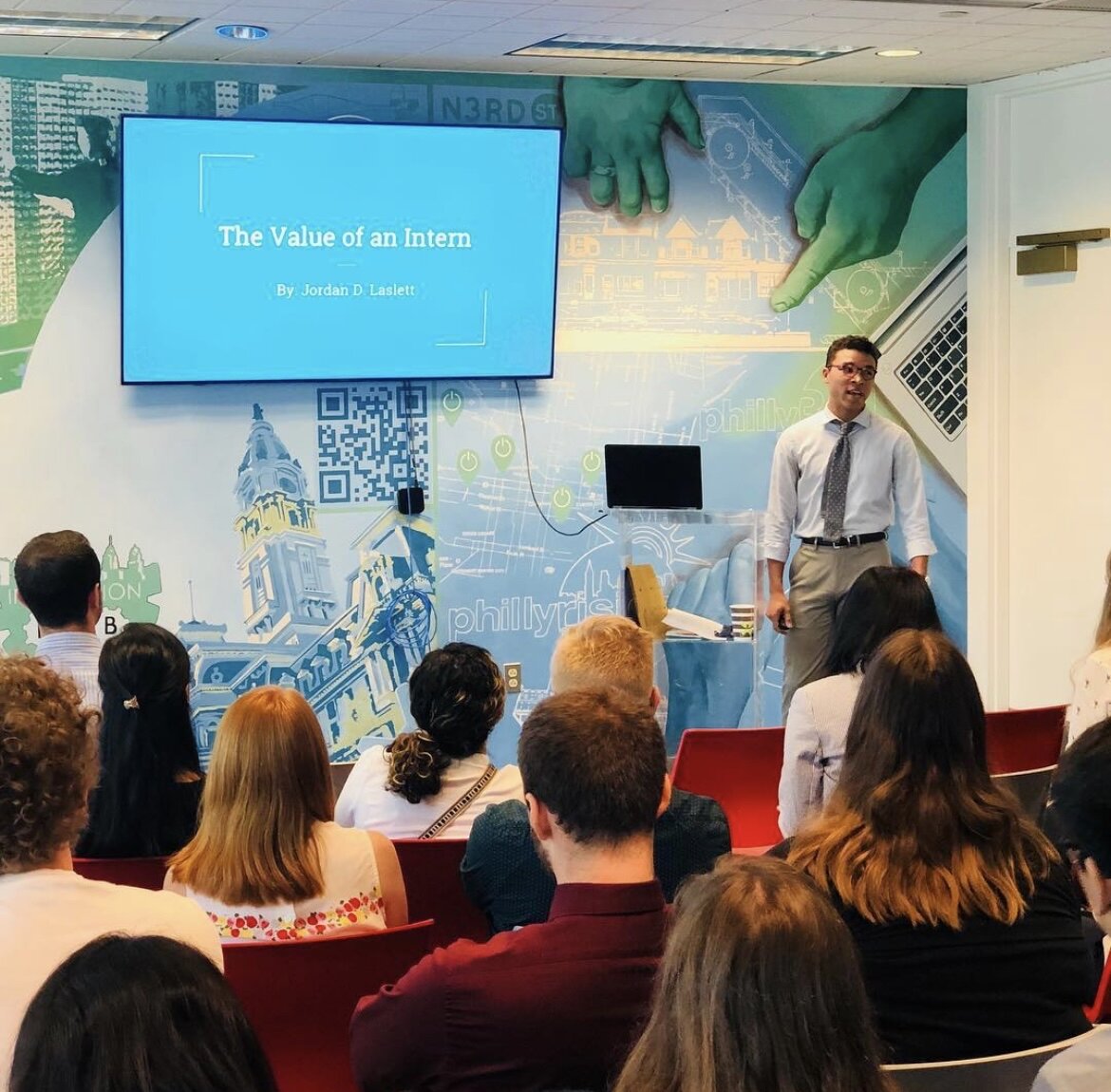
When Jordan Laslett was hired for the summer of 2018 as an AmeriCorps VISTA at the City of Philadelphia, he was energized. A rising senior in college, he knew that this job was a foot in the door in government, where he wanted to make his career. It wasn’t well-paid; he did the math and it would have worked out to about $13,000 for a year’s work. But it paid the bills and allowed him to do innovative work with the community, coordinating a career empowerment fair to teach others how to get jobs in state and local government.

As project manager of this initiative, he got to work with other interns around the City, including those in the Mayor’s Internship Program. Jordan worked side by side with a handful of them to implement the career empowerment fair, which was a success.

They became friends, and throughout the experience, the interns joked about the fact that they were doing the same work, but Jordan was being paid and they weren’t. The dozens of young people who served in the Mayor’s Internship Program were working as volunteers, with no guarantee of a future job in the agency. After hearing their stories over many lunches, Jordan got passionate that they, too, should be paid for their work. He also recognized that the interns who were able to work for free were, in a sense, the lucky ones. How many people with less financial means were excluded from the program?

At the end of the summer, Jordan was left with a few weeks on his contract and nothing left to do on his assigned project. So he checked with his intern friends and asked if they would support him making the case that interns in their program should be paid. They did. With that, he got to work gathering the data he needed to make a surprise presentation on the topic at the big end-of-the-summer event: 

“I did not start off by telling my supervisors about it. It was one of those things where it was like, I know this was going to ruffle feathers and I knew that there were a few key folks that knew that I was working on something for the interns but I made it very abundantly intentional to not really expose my hand too much, knowing the Mayor was going to be there, knowing HR was going to be there. At the time I had this streak in me.”

Jordan worried that making a scene at the final presentation could ruin his chances for a career in government, or at least at the City of Philadelphia. But he pressed forward and gathered the data. Meeting with the interns frequently, he passed out surveys that asked about their commutes, their rent and expenses, whether a third party was sponsoring them, and so on. He also did the math on what a paid internship program would cost: he calculated it would only be $80,000 to pay 50 interns minimum wage for 25 hours a week in the summer.

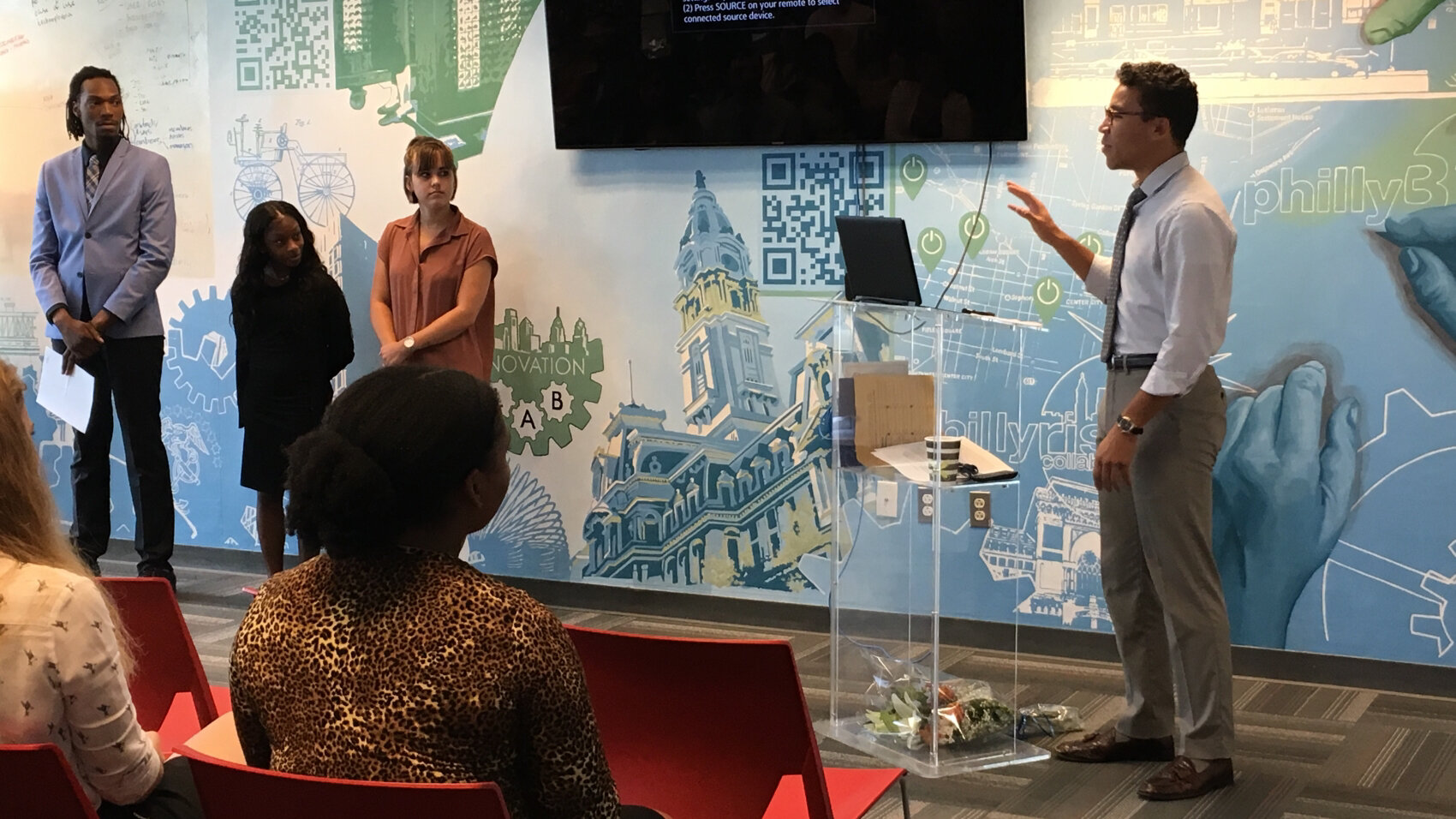
When the big day arrived, Jordan was ready. When he was called up for his presentation, he asked the other interns to come up front and join him. It got immediately uncomfortable in the room when as began to share each other’s stories of working as unpaid interns. For an hour, in front of the city’s senior staff and the public, Jordan presented the data and argued that if they city wanted to live up to its progressive values, it needed to pay its interns.

After the presentation, a journalist from Temple News who had been in the audience approached Jordan for an interview. The next day, he and his pitch for paying interns was featured on the newspaper’s front page. After that, he says, “it was a domino effect and everything moved quickly.” Other media picked up the story, and national advocacy organizations reached out to him to offer support. Within three months, the City of Philadelphia announced it would be paying its interns moving forward, a decision that has been met with celebration locally and nationally. And Jordan, personally, has experienced only positive feedback from city officials and staff.

Of course, at the beginning, he didn’t know it would turn out this way:

“I definitely put my neck out there without realizing it and I think I took a huge risk in terms of having that go nowhere and having nothing to show for the effort.”

It took immense courage for an intern to take this kind of stand. It also took the connection he had with other interns and supportive staff to formulate the proposal.

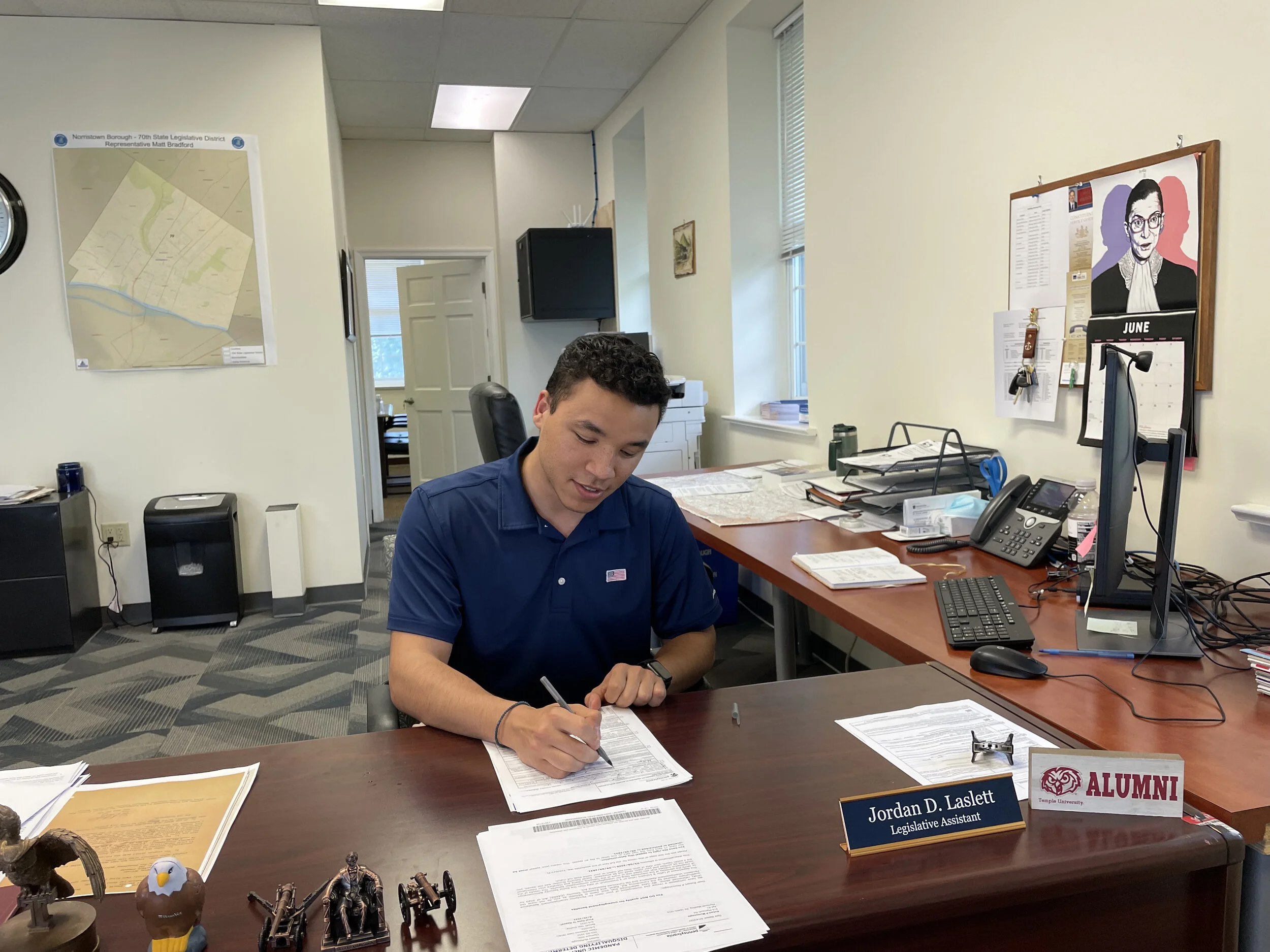
Today, Jordan is putting those same superpowers of courage and connection into his work as legislative assistant for State Representative Matt Bradford. Working with constituents with urgent needs is tough because it exposes system failings, and how they create pain for real people. Gaps in the systems affect their constituents, who come to him for solutions. Every day he’s faced with difficult situations, such as people potentially losing their homes due to issues like overdue electricity bills. 

How does he deal with the stress of the job, and the disappointment of witnessing unjust systems up close and personal every day? He grounds himself in his purpose, and why he chose public service. He takes satisfaction in building relationships with constituents and finding creative solutions for them. He notices and documents opportunities for improvement, then identifies the right time and decision-maker to bring them to for consideration.

But what is his #1 strategy for keeping healthy, sane, and motivated as a Herocrat trying to make systems work better for people? He latches onto the success stories and savors them. Like that time he saw his shot to get city hall interns paid, and he took it. 

Ling Becker, Workforce Development Dynamo

Ling Becker leads a team of 80 employees in Ramsey County, Minnesota, that provides workforce services and programs to jobseekers while also supporting businesses. This is no small challenge in a region with significant disparities based on race, and a workforce system that often falls short.

In the face of these systemic issues, Ling brings an unusual amount of energy, connection, and out-of-the-box thinking to her work. I asked her how she does it, and here is what she shared.

What is your approach to changing systems?

One approach I rely on a lot is bringing others along the way with me. Many times different people along the continuum that help to bring services and resources to our community are removed from the impacts that their role makes. I think it is absolutely critical that all along the journey of our work, everyone has a chance to see the critical role they play.

An example is in the deployment of the county’s 2020 CARES Act funding. From day one, it was going to be a big lift to get these resources out to the community. However, the more everyone from our Procurement area, Information Services, and Communications Departments could understand who were helping and why we were doing what we were—it really helped to get significant buy in.

In our government work, we constantly have to remind ourselves that our work isn’t just about contracts, numbers, spreadsheets, names on a list—but rather these are real people, families, individuals who all need us to do our roles well, quickly and efficiently.

What has been most challenging for you in this work?

I think the challenge is that it often times it feels like we are never doing enough. A colleague of mine recently provided me some coaching to remind myself that in most situations two things can be true at the same time. I am constantly telling myself, yes—systems are broken, but yes—we are doing a lot of good work to try to make change.

What keeps you going? 

What keeps me motivated is continually recognizing the impact of even changing one life. We have significant economic and employment disparities in Ramsey County. I feel very fortunate to have an opportunity every day to make an impact and change personal outcomes for our residents but also lead systems change to ensure we are able to advance outcomes more equitably in the future for all residents.

WIB_vfj.png

How do you handle the hard days?

I probably have not been doing very good at this. I’m really trying to remove my emotions more from my work. I take some time to reflect before I respond when I’ve had a hard day. I check in with people I trust to see if perhaps I need to look at things from a different angle. It is truly critical to have people that will hold you accountable.

Herocrats use their superpowers – connection, courage, and creativity – to lead change. Which of these do you use?

I really love connection. I get super motivated in talking to others who also want to make impactful change. Ultimately the work we do cannot be done by one individual. Rather, we need to have a multitude of players all doing their part to collectively move the dial to ensure that we build a more equitable economy for all in our community.

What else would you like to add?

One additional thing I have been reflecting on is that we all go farther when truly no one cares who gets the credit. I’ve seen time and time again the rewards of putting a full effort into something that is really created collectively.  I am learning a lot lately about seeding things, supporting, uplifting and then at a good time—moving away and seeing it bloom.

It feels good to realize we don’t need the credit and sometimes we are in a particular role for just a part of something that is a much bigger whole, but we don’t have to do all of the work.

We have to let everyone do what they are meant to do!

FAST.jpg

Ling Becker is the Director of Workforce Solutions for Ramsey County and Executive Director of the Workforce Innovation Board of Ramsey County.  Ling oversees a department of 80 staff who deliver workforce services and programs to residents and businesses of Ramsey County.

Prior to that role, Ling was the Executive Director of the Vadnais Heights Economic Development Corporation serving the NE metro connecting businesses and local governments on economic development projects and programs. In that role, Ling lead several award-winning workforce partnerships with local school district and community colleges.

Ling is a graduate of the University of Minnesota Morris and holds a Master’s Degree in Public Administration from Syracuse University where she was a Woodrow Wilson Fellow. In 2018, she was a recipient of Minnesota Business Magazines REAL Power 50 Award for her work in helping businesses grow and expand in the NE metro area.

Herocrats in Action: Carrie Christensen

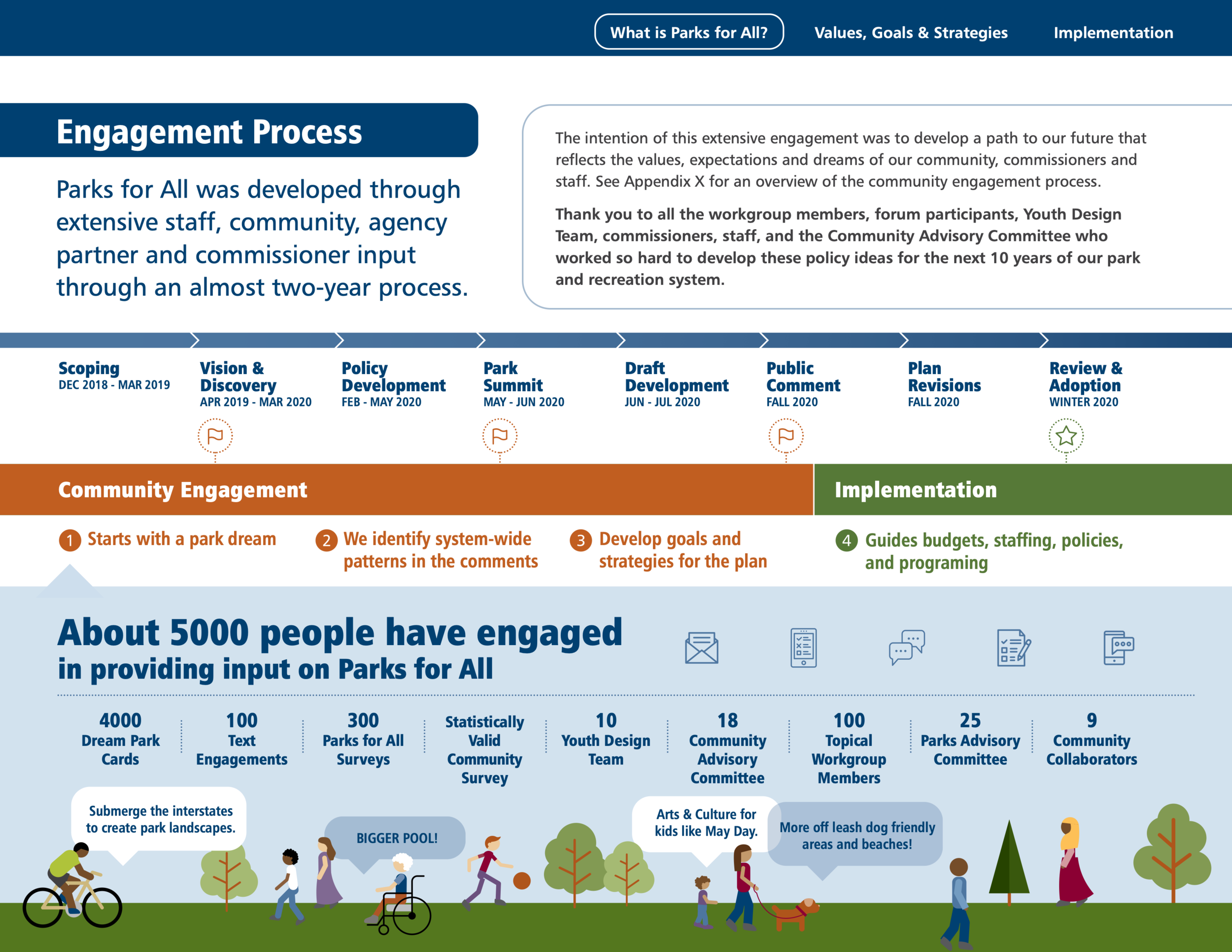
Carrie Christensen has been doing work at the the Minneapolis Park & Recreation Board (MPRB) that would be considered bold and innovative under regular circumstances. Given the crises in 2020, it’s even more remarkable. At a time when policymakers and community members can barely think beyond the most urgent issues in front of them, Carrie and her team have engaged around 5,000 people to create Parks for All, the long-term vision for Minneapolis’ parks and recreation system.

I interviewed Carrie to understand how she she did it. Here are some excerpts from our conversation.

How long have you been at the MPRB and what have you been working on there?

In April, it will be my 4 year anniversary! My work there is focused on park master planning, community engagement, interagency coordination on transportation related projects, and have been the staff lead on our comprehensive plan. After working as a consultant around the country for several years, it has been satisfying and grounding to focus my work in my own community.

What is Parks for All, and why is it important?

Parks for All, the Minneapolis Park and Recreation Board 2021 Comprehensive Plan, sets the agency policy priorities for the next decade of the Minneapolis park and recreation system. It is based on input from community, staff, organizational and agency partners, and elected officials.  

 How did you go about the process?

 I like to think of it as a participatory policy making process.  It involved many many voices and authors, with 1000s of people’s input. While it had its deep challenges working on a plan amidst a pandemic and social unrest, I think it also was an important backdrop that emphasized some of the historic inequities in our system that we want to dismantle in the future. This is a policy moment. MPRB’s comprehensive plan is an important container for policy change locally where we can apply things we learned, remembered, or saw amplified in the past year.

engagement MPRB for web.png

 What else is different or new about this plan?

We also hired youth to staff the project. We call them the Youth Design Team. They were an amazing group of high schoolers from across Minneapolis that became experts on Minneapolis parks and rec and had a great impact on the plan. They made policy recommendations, facilitated community engagement, and generally provided critical thinking and creative style to the process and plan. We’ve also worked with some really talented local graphic designers, Keiko Takehashi and Background Stories, who have been amazing at helping us make the document welcoming and fun to read – which is really important when the audience is so broad!

 What has been most challenging in developing the plan? What barriers did you encounter?

It’s been challenging to engage leadership throughout the process, especially in the past year with COVID, since their plates are so full and like so many other public agencies are focused on being reactive/responsive to the challenges locally and internationally. Comprehensive planning, on the other hand, is a very proactive and intentional mode of decision making. Our team has worked hard to foster a creative, inclusive, and data-driven plan for our future.

 What about it has been positive?

We have deeply engaged with community, staff, leadership, and agency partners, centering equity in the process. I am a firm believer in the idea that the more diverse perspectives you have working on an issue, the more effective and innovative the solution will be.  While thousands of people have engaged in the plan, over 120 people actually helped write the plan from a range of disciplines, ages, ethnic/racial identities, and roles.

Future MPRB for web.png

Herocrats use their superpowers – connection, courage, and creativity – to lead change. Which of these did you draw on? Can you give an example?

Oh, all of them! I’m so grateful to have the Herocrats language to help me name the important ingredients in the recipe for navigating complex systems (and not burning out!)

What else would you like to add?

For information about the process and to check out the draft plan, visit bit.ly/MPRBCompPlan. The public comment period is open until July 18, 2021.

carrie headshot.jpg

Carrie Christensen is a Senior Planner at the Minneapolis Park and Recreation Board, where she works on park policy, design, and community engagement.With a Masters of Landscape Architecture from the University of Minnesota and a B.A. in Urban Studies from Stanford University, her cross-sector work combines facilitation, design thinking, community organizing, project management, data analysis, curation, planning and environmental design processes.

Carrie is a published author, an adjunct faculty at the University of Minnesota, a 2001 Fulbright Scholar, a 2010 Creative Community Leadership Institute Fellow, a 2019 Herberger Institute Practices for Change Fellow, and has consulted with communities across the country around strategic planning, creative community engagement, and resilient design.